

Tullystown
Houses within 10km of this house
Displaying 35 houses.
Houses within 10km of Tullystown
Displaying 35 houses.
| House name | Description | |
|---|---|---|
| Bracklagh | The house faced Bracklagh Lough, very close to the border between counties Cavan and Longford. It is marked on the first edition six inch Ordnance Survey map (publ. 1837). In the mid-19th century it was inhabited by Captain Mark Ker and held from the Ecclesiastical Commissioners. The rateable valuation was £15. Home of Matthew William Webb and family in 1901. A building is still extant on this site. | |
| Fortland | Leet records Fort-land, Mount Nugent, as the home of the Reverend H. Maxwell in 1814. Lewis records W. Gosling as the occupant of Fortland in 1837. The first edition Ordnance Survey map (publ. 1837) shows Fortland to have been a substantial property with laid out gardens and plantations and a demesne of over 300 acres. It was the home of the Hon Somerset Maxwell at the time of Griffith’s Valuation. He held the property in fee and the buildings were valued at £27. By 1906 this valuation had increased to £52.10.0. and the house was the home of Mrs Maxwell. The house is demolished and the site now a green field. | |
| Arley Cottage | A graphic of Arley Cottage ‘belonging to Colonel Barry’ in the National Library is dated circa 1820s, see http://catalogue.nli.ie/Record/vtls000550550. The Farnham Papers also refer to Arley Cottage in 1822. Lewis records Arley as the property of Lord Farnham and it was occupied by the Hon Somerset Maxwell in the mid-1840s and by the Hon Richard Maxwell in the mid-1850s when it had a rateable valuation of £20. The Hon. Henry Maxwell was the occupier in 1906. This building is no longer extant. | |
| Lakeview (Garrison) | A house on the Farnham estate, named on the first edition Ordnance Survey map (publ. 1837), valued at £11.10.0. in the mid-19th century when occupied by Edward Soren and held from David Kellett. | |
| The Cottage | This house is located close to Lough Sheelin and on the roadside. In the mid-19th century it was valued at £12, occupied by James Sneyd and held from Andrew Booth Bell. In 1906, the townland of Bellsgrove was in the occupation of Matthew William Webb and The Cottage had a rateable valuation of £7. It appears to be still extant. | |
| Kilnahard House | Described by the National Inventory of Architectural Heritage as a castellated country house built circa 1820. Kilnahard is situated on the shore of Lough Sheelin. In the mid-19th century it was occupied by Tuite Dalton, who held the property from Andrew Bell. The buildings had a rateable valuation of £18. This house is still a residence. | |
| Crover House | This house is located on the shore of Lough Sheelin and in the mid-19th century was valued at £21.5.0. for rates. It was occupied by Thomas Cummins and held from Lord Farnham’s son, the Hon Somerset Mawell. By 1876 Robert John Cuming was resident at Crover. He owned 1,118 acres in the county. In 1901 Julia Cuming, a widow, and her daughter Kate were still resident. This house became a hotel in 1957. http://www.croverhousehotel.ie/History | |
| Woodlawn | A two storey house, close to the shore of Lough Sheelin, built about 1800 and still occupied. It was vacant at the time of Griffith’s Valuation but held by William Mahaffey from the Hon S. Maxwell and valued at £16.10.0. |

|
| Hollywell | Located on the Farnham estate and known as Tara Cottage on the first edition Ordnance Survey map (publ. 1837) and as Hollywell on the 25 inch map. An engraving in the National Library appears to be this house Hollywell Cottage and dates it to at least 1820, see https://catalogue.nli.ie/Record/vtls000152344. Occupied by the Reverend Henry Cottingham at the time of Griffith’s Valuation. Valued for rates at £14 the house was held from Mark Woods. The Reverend H. Cottingham held a townland in each of the parishes of Annagh and Urney at the time of Griffith’s Valuation. His representatives owned 381 acres in 1876. A building reduced in size continues to occupy this site. | |
| Summerville (Cavan) | Another house located on the west shore of Lough Sheelin. In 1814 James H. Cottingham was the proprietor of Summerville, Mount Nugent. The house was unoccupied at the time of Griffith’s Valuation but in the possession of William Webb. It was valued at £15.10.0. for rates. It was much reduced in size by the time the 25 inch map was compiled. A building still occupies the site. | |
| Rock House (Cavan) | Marked on the first edition Ordnance Survey map (publ. 1837). In the 1850s, this house was occupied by the Reverend Matthew Webb and held from George Wilton. It had a rateable valuation of £21. It is now the centre of a farming complex. | |
| Mountprospect | A Nugent family home until the mid-19th century when it passed into the possession of Richard Dempsey. Eliza Dempsey, a widow, was resident in 1901. This house no longer exists. | |
| Drumroragh Lodge | In 1814, Thomas Goslin was recorded by Leet as the occupant of Dromroa, Mount Nugent. Named on the first edition 6 inch Ordnance Survey map (publ. 1837) Drumroragh Lodge was quite a substantial building. It was the home of Charles Carr Morton and his wife Charlotte Tatlow. The demesne and mansion house of Drumrora were advertised for sale on 21 June 1855 and appears to have been purchased by a relative of the Mortons’ John Tatlow. Griffith’s Valuation in the 1850s describes Drumroragh as a herd’s house with a rateable valuation of £12. It was occupied by John T. Tatlow, who held it in fee. Later maps show a smaller house slightly to the east of the original building, which was demolished. The house is extant but does not appear to be occupied. | |
| Kilnacrott Cottage/House | In 1837 Lewis records Pierce Morton as the proprietor of Kilnacrott. This was Kilnacrott Cottage as marked on the first edition 6 inch Ordnance Survey map (publ. 1837). Subsequently a Tudor Revival house was built very slightly to the north of the Cottage for Pierce Morton (National Inventory of Architectural Heritage). Morton sold the house in 1850 to Samuel Moor, who sold it on privately to William Hague. This house had a rateable valuation of £65 at the time of Griffith’s Valuation and was occupied by George H. L’Estrange who held the property from William Hague of Cavan, father of William Hague, architect of Cavan and Dublin. In 1876 William Hague held 459 acres in county Cavan. In the 1880s Kilnacrott became the home of the Lynch family. In 1906, Charles Lynch was resident. He died in 1913 (see will administrations in the National Archives). From 1930 the building was used as a school by the Holy Trinity Priory. In 1954 a grant of arms was issued to the Rt Reverend Felim Cornelius Colwell, Lord Abbot of the Abbey of the Holy Trinity of the Canons Regular of Premontre at Kilnacrott, Co Cavan, and to the Community, see National Library, GO MS 111H: 27-28. Kilnacrott is now known as the Cavan Centre, a ‘Residential Centre for Education and Community Development’, see http://www.cavancentre.ie/ | |
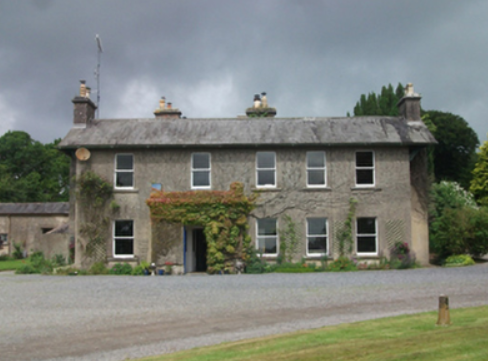
| Bob's Grove/Farren Connell | The Nugent home known as Bob’s Grove dates from the mid-18th century. It was later known as Farren Connell possibly after alterations were made in the mid-19th century. In 1814, Oliver Nugent was resident at Bob’s Grove. In 1837, Lewis records Christopher E.J. Nugent as proprietor. At the time of Griffith’s Valuation Christopher’s representatives held the property in fee. It was valued at £24 for rates. Emily Nugent, a widow, was resident in 1901 and her son Colonel Oliver Nugent and his wife in 1911. Farren Connell continues to be the home of this family. |
|
| Dungummin House | Dungummin House with a very small demesne is named on the first edition six inch Ordnance Survey map (publ. 1837). In 1814 Leet records John Ingham of Dungimmon, Mount Nugent. Joseph Lynch was the occupier recorded in Griffith’s Valuation. He held the property, described as a herd’s house and valued at £12.10.0., from Thomas Whitney. Michael Palles Lynch of Dungimon, county Cavan and of Coola, county Westmeath, sixth son of Joseph Lynch of Roebuck House, county Cavan, is recorded in Walford’s 1910. | |
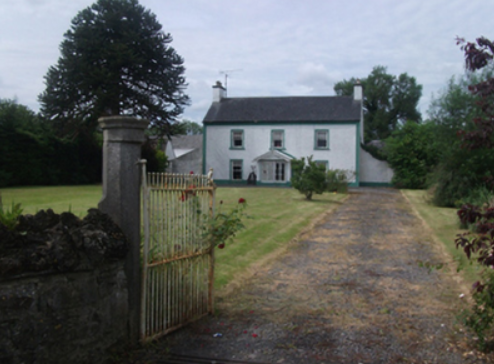
| Lisnabrin | This house, located on the outskirts of Mount Nugent, was built after the first edition six inch Ordnance Survey map (publ. 1837) was compiled. John Love was the occupant in the 1850s, holding the property, valued at £13, from the Most Reverend J.G. Beresford. A Lynch family home at the beginning of the 20th century and still a residence. |
|
| Roebuck | Roebuck was a Lynch home from at least the early 19th century when Edward Lynch was recorded as resident in 1814. Lewis records W. Reilly as the proprietor of Roebuck. In the 1850s Joseph Lynch was the occupant recorded in Griffith’s Valuation, when the buildings were valued at £15 and held from the Representatives of William O’Reilly Adams. By 1906, Henry Galligan was occupying this 'mansion' house valued at £15 for rates and 365 acres of untenanted land. | |
| Foxfield House | In 1814, Andrew Bell was resident at Foxfield (N435 888). In the 1850s John George Parr lived at Foxfield House, a residence on the other side of the road from the original Foxfield, which he held in fee. It was valued at £8 for rates. This house continues to be occupied. | |
| Fernsborough | Thomas Gosselin was leasing this property from William Shirley Ball’s estate at the time of Griffiths Valuation when it was valued at £25. In 1837 Lewis noted “Fernsboro” as the seat of A. Burrows. It was also recorded as the seat of Alexander Burrowes by Leet in 1814. Fernsborough is no longer extant. Hussey de Burgh noted Thomas Gosselin as the proprietor of almost 300 acres in County Longford in the 1870s. | |
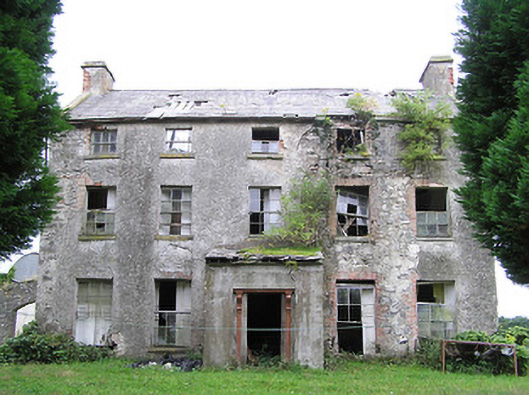
| New Grove (Longford) | John Hynds was leasing this property from the Hamilton estate at the time of Griffiths Valuation in the 1850s, when it was valued at over £11. In 1837 Lewis referred to it as the seat of R. J. Hinds. It is now a ruin. In the 1870s, John Hinds of New Grove was recorded as the owner of over 240 acres in County Longford. |
|
| Creevy House (Longford) | George Dobbyn was leasing this property from the Maude estate at the time of Griffiths Valuation in the early 1850s when it was valued at £20. It is still extant. |

|
| Newtown House (Fore) | This house was enlarged after the publication of the 1st edition Ordnance Survey map in the 1830s. Elizabeth Ferrally was leasing the property from the Pakenham estate at the time of Griffiths Valuation in the early 1850s when it was valued at £9. The Valuation Office books of 1838 also noted her as the owner when the house had a valuation of almost £6. A house is still extant at the site. | |
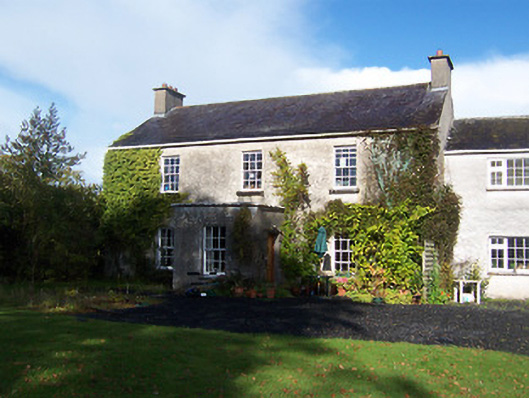
| Tromra House | Tromra was being leased by Wiilliam Riggs from the Pakenham estate at the time of Griffiths Valuation in the early 1850s when it was valued at £13. The Valuation Office Books of 1839 indicate Mrs. Mary Anne Riggs was occupying a property valued at £10 at that time. Tromra is still extant and occupied. |
|
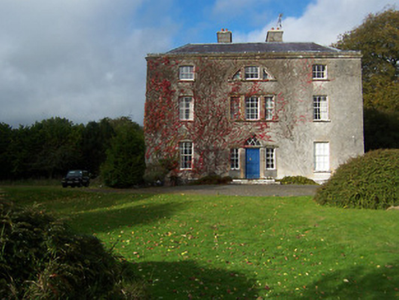
| Hilltown | Hilltown House, built in front of the ruins of a castle, is a three-bay three-storey over basement Palladian country house, built about 1780, possibly by William Webb. It was the home of William Webb in 1814 and in 1837. Valued at £26 at the time of Griffith’s Valuation (publ. 1854) it was occupied by George Webb and held from Lady Oranmore [and Browne]. Members of the Webb family were still resident in the early 20th century and O’Brien writes that the estate was acquired by the Land Commission. The house is still a private residence. |
|
| Gore Port [Derrymacegan] | In the 1850s Captain Alexander Walker was leasing this property from the Gore estate when it was valued at £15. It is labelled Derrymacegan on the 1st edition OS map but as Gore Port on subsequent editions. The National Inventory of Architectural Heritage suggests the earlier part of the property dates from the mid 18th century and the later part from the early 19th century. O'Brien suggests that it was Captain Walker who built the later building, c.1835. Sir Samuel Walker, Lord Chancellor of Ireland, 1892-95, was born at Gort Port in 1832. The house is still extant. | |
| Annis Grove | This property was valued at almost £10 at the time of Griffiths Valuation in the early 1850s when it was leased by Patrick Lynch from the Gore estate. O'Brien states that it was occupied by the Lynch family from at least the early nineteenth until the last quarter of the twentieth century. He indicates that it was originally known as Money, from the townland in which it is situated. It is now a ruin. | |
| Carlanstown | At the time of Griffiths Valuation Wiilliam McCullogh was leasing this property from the Duke of Buckingham’s estate when it was valued at £13. It is located close to the site of Carlanstown Castle and labelled Carlanstown House on the 25-inch Ordnance survey map. O'Brien suggests it was built c,1830. Both he and the National Inventory of Architectural Heritage provide extensive details of its associations with older structures at the site and the connections with the Nugent family. Carlanstown is still extant and occupied. |

|
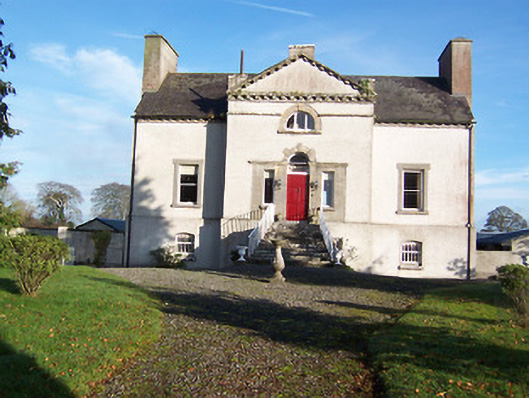
| Gaulstown House (Fore) | The National Inventory of Architectural Heritage suggests this house was built about 1730. At the time of Griffiths Valuation it was occupied by Andrew Mulligan, leasing from Hubert de Burgh’s estate, when it was valued at £21. It had previously been the seat of the Lill family who had succeeded to de Burgh property and adopted that surname. The house is labelled Gaulstown on the 25-inch Ordnance Survey map. It is still extant. |
|
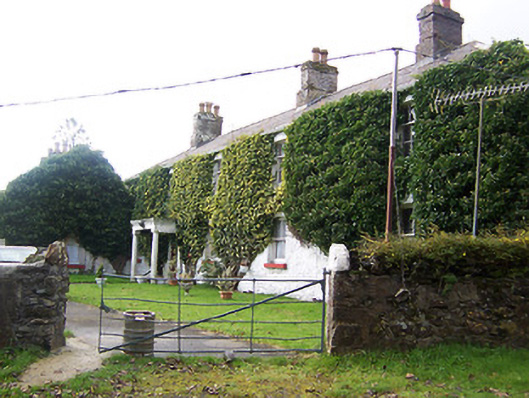
| Castletown Cottage | At the time of Griffiths Valuation this property was held in fee by Samuel Reynell when it was valued at almost £8. O'Brien suggests that the original property was built c.1840. The National Inventory of Architectural Heritage indicates it was extended in the mid C19. The Valuation Office books of 1841 noted a house valued at almost £7 in this townland, then occupied by James Campbell. The house is labelled Castletown Cottage on the 25-inch edition OS map of the early C20. It is still extant and in use. |
|
| Lickbla House [ Rockbrook](Fore) | Thomas Fagan was leasing this property from James Fallon at the time of Griffiths Valuation in the early 1850s when it was valued at almost £19 and included a mill. In 1906 it was the property of Patrick J. Fagan and valued at almost £21. The National Inventory of Architectural Heritage suggests that it dates from c.1800 but with later modifications. It is labelled Rockbrook on the 1st edition OS map but as Lickbla House on later editions and is still extant and occupied. |
](https://landedestates.ie/storage/img/orig/3618.png)
|
| Newcastle (Fore) | Walter Keating was occupying Newcastle at the time of Griffiths Valuation in the early 1850s when it was leased from the Urquhart estate and valued at £19. In 1839 the Valuation Office Books indicate that George Keating was the occupier with a valuation of £23. It is still extant. | |
| Turbotstown [Turbotstown House] | The National Inventory of Architectural Heritage suggests that the present house at Turbotstown was built in the early decades of the nineteenth century, on the site of an earlier house. At the time of Griffiths Valuation in the early 1850s it was held in fee by Gerald Dease when the buildings were valued at £80. In 1906 it was still the property of Major Gerald Dease and valued at £84. It was occupied by the Dease family until the 20th century and is still extant. O'Brien provides a detailed account of this house and its occupants. On the 1st edition Ordnance Survey map it is labelled Turbotstown House but on the 25-inch edition of the early 20th century it is labelled Turbotston. |
![Photo of Turbotstown [Turbotstown House]](https://landedestates.ie/storage/img/orig/3616.png)
|
| Lakeview House (Fore) | John Smith was leasing this property from Reverend Thomas Smith at the time of Griffiths Valuation when it was valued at £15. The Valuation Office books of 1838 state that the house then held by Reverend Thomas Smith was valued at £16. It is still extant and in use. | |
| Mayne Glebe [Mayne Rectory] | Mayne Rectory was leased by Reverend William Eames from the estate of Reverend Thomas Smith at the time of Griffiths Valuation when it was valued at £8. In 1839, the Valuation Office books recorded that it was occupied by Reverend Richard Handy and had a valuation of almost £9. The National Inventory of Architectural Heritage suggests it was built c.1812. It is still extant and in use. |
![Photo of Mayne Glebe [Mayne Rectory]](https://landedestates.ie/storage/img/orig/3615.png)
|