

West House
Houses within 5km of this house
Displaying 16 houses.
Houses within 5km of West House
Displaying 16 houses.
| House name | Description | |
|---|---|---|
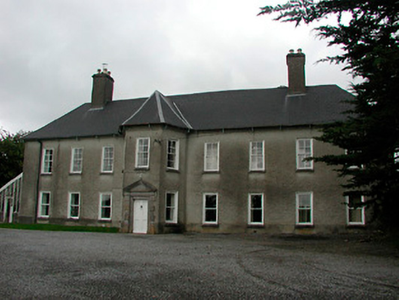
| Carrick | Carrick House located near the eastern shore of Lough Ennell, named on the first edition OS map, this is an eight-bay two-storey house, built c.1740. It is recorded on the Taylor and Skinner maps of the late 1770s and was the home of the Fetherstonhaugh family. It was the residence of William Fetherstonhaugh (died 1851) in 1837 and held by his son, another William, in fee at the time of Griffith’s Valuation (publ. 1854) when the house was valued at £29. He married Alicia daughter of Thomas Berry and they had a son Francis Berry Fetherstonhaugh who married Elizabeth Hornidge of Calverstown. Their descendants were still living at Carrick in the 1920s. |
|
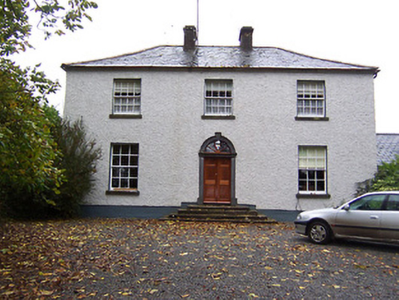
| Far View House | Far View House, an early 19th century two-bay, three storey house, originally a home of the North family. David North who married Catherine Pim was resident in 1837 and at the time of Griffith’s Valuation (publ. 1854), when the house was valued at £15 and held from Catherine Reynolds. The house was occupied by the Gavin family in the early 20th century. |
|
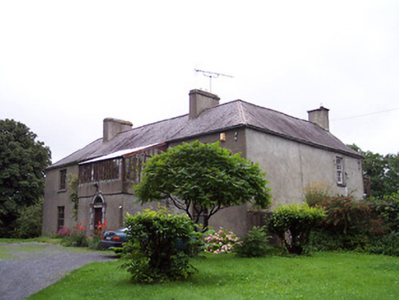
| Sidebrook House | Sidebrook house is marked on the first edition OS map and named on the 25 inch map. It is a four-bay two-storey house built in the early 19th century and may incorporate the fabric of an earlier house. Taylor and Skinner record a Rochfort Esq at Sidebrook in their maps surveyed 1777-1783. It was later in the ownership of a J. Rochfort in 1837. At the time of Griffith’s Valuation (publ. 1854) John Rochfort held the house valued at £11 with 600 acres from Cooper Rochfort. In the possession of the Lawrence family for most of the 20th century. |
|
| The Cottage | The Cottage, Gallstown, is named on both the first edition OS map and the 25 inch. This was the seat of the North family at the end of the 18th century (O’Brien). By 1814 Hugh Sheil was resident and Lewis records Mrs Sheil of The Cottage. This family was related to the Sheils of Gortlumly. The house was occupied by Margaret Sheil at the time of Griffith’s Valuation (publ. 1854), valued at £10 and held from Lord Kilmaine. Home of employees of Lord Kilmaine in the early 20th century. The house is no longer extant. | |
| Gortumly | Lewis refers to John Sheil of Gortumly and a long building is evident in this townland on the first edition OS map. O’Brien writes that the Sheils were resident at Gortumly from the mid-18th century. Gortumly house is named on the 25 inch map and is located just south of the long building on the first edition map. O’Brien writes that the Sheils bequeathed the house to a Mr O’Neill about 1910. Patrick O’Neill, a farmer and clerk to the County Council, was resident with his family in 1911. The lands were later sold to the Land Commission and the house demolished. | |
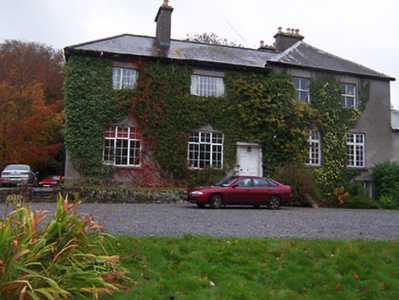
| Calverstown | Named on the first edition OS map, Calverstown House is a three-bay two-storey over basement house, built about 1800. Originally a Rochfort home it was occupied by Charles Rochfort in 1814. Calverstown House was the home of J. Hornidge in 1837. At the time of Griffith’s Valuation (publ. 1854) it was valued at £10, occupied by George Hornidge and held from Pilkington. Hornidge family members continued to live here until the mid-20th century. |
|
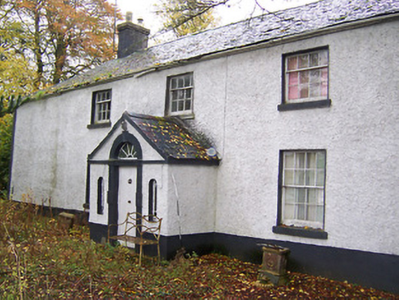
| Dalystown | Dalystown, marked on the first edition OS map and named on the 25 inch map, a three-bay two-storey house, built about 1810. It was the home of Charles Pilkington in 1837 and at the time of Griffith’s Valuation (publ. 1854). Valued at £11 the house was held from James W Berry with 189 acres. |
|
| Dalystown House | Dalystown House, marked on the first edition OS map and named on the 25 inch map. According to the Griffith’s Valuation map this was the house valued at £9 occupied by Samuel Cantrell who held it and 218 acres from James M Berry. This house was demolished. | |
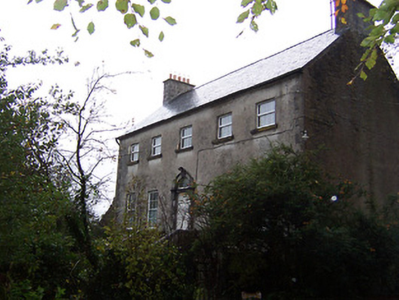
| Guilford House | This land was originally the property of the North family who were connected to the Earls of Guilford. A five-bay two-storey house over a raised basement, built in the late 18th century, possibly by the Reynolds family, but was leased to the Usher family by the end of the century. Occupied by Christopher Coffie/Coffey junior in 1814 and by F. Usher in 1837. At the time of Griffith’s Valuation (publ. 1854) Christopher Swift held the house valued at £12 from Francis Usher. O’Brien writes that the Reynolds family still own Guilford House. |
|
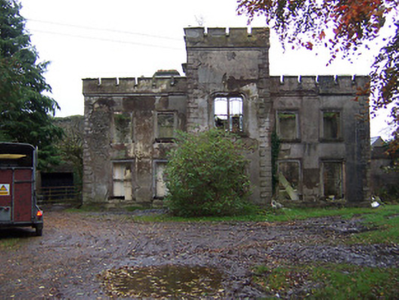
| Newcastle | A five-bay two-storey castellated country house, built or rebuilt in the mid-19th century by the Coffey family who bought the property from the Norths in the 1780s. It is now derelict. The National Built Heritage Service states that the remains of an earlier house built by the North family, c.1740, and a tower house built c.1640 can be seen to the rear (west). The Taylor and Skinner maps record Newcastle as the property of the Norths. In 1814 and 1837 Newcastle was the home of Christopher Coffey. At the time of Griffith’s Valuation (publ. 1854) Richard Coffey was resident, when the house valued at £30 was held from Charles B Marley. The house would appear to have been unoccupied at the beginning of the 20th century. |
|
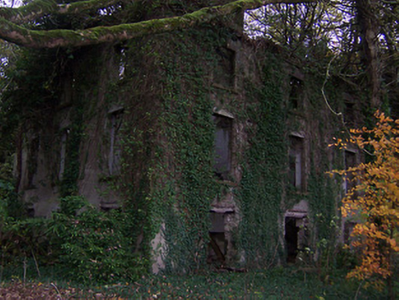
| Templeoran House | Templeoran House, named on the first edition OS map, this was a two-storey, five-bay late 18th century house which O’Brien states has been an ivy covered ruin for many years. In 1837 Mrs Johnson was resident and at the time of Griffith’s Valuation (publ. 1854) the house was the home of Edward Fetherstonhaugh, valued at £8.10 and held from George A Boyd. | |
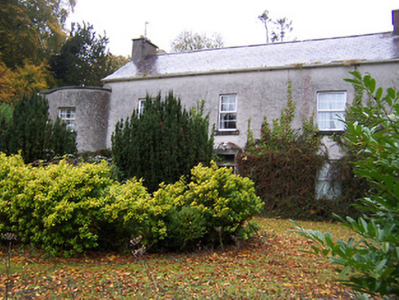
| Kilbride | Kilbride House is a three-bay two-storey house, built about 1810 to the north of Kilbride Castle. The Norths were in possession of Kilbride in the 18th century and Mrs North was resident in Kilbride House in 1814. The list of subscribers to Lewis’ Topographical Dictionary in 1837 includes A J Pilkington of Kilbride Castle. He was married to Mary daughter of Roger North. At the time of Griffith’s Valuation (publ. 1854) the house valued at £9 was occupied by Abraham Pilkington who held it from the representatives of R W Cooper. James King and family were resident at Kilbride in 1901 and 1911. |
|
| Dunboden Park | Dunboden Park is named on the first edition OS map with pleasure grounds to the east. A late 18th century neoclassical country house built by the Rochforts, one of whom was murdered on the steps of the house in 1797. The house was reputedly remodelled by Sandham Symes (1807-1898), about 1860 for the Cooper Family of Markee Castle, county Sligo (boi). The Coopers purchased the estate after the death of Robert Rochfort in 1797 and remained in possession until the early 20th century. At the time of Griffith’s Valuation (publ. 1854) the house, offices, gatelodge and lodge were valued at £73. Anne Cooper was resident holding the property from Abraham Pilkington. By 1906 the valuation had increased to £93 and Colonel Edward Cooper was the occupant. The house was burnt in 1923. A mausoleum to Joshua Harry Cooper who died 1819 is located to the south of the ruins of the house. |
|
| Whitewell House | Originally a home of the North family and occupied by Arthur Grose in 1837. At the time of Griffith's Valuation (publ. 1854) Whitewell was the residence of John G Battersby MD, valued at £9.10 and held from John North. O'Brien records that Elinor widow of John Roger North died here in 1858 and that the lands and house were leased to Laurence and Michael Gavin in 1859. The Gavins still own the lands but the house is a ruin. | |
| Tore | This house is named Toor on the first edition OS map and Torr on the 25 inch map. Located a short distance south east of Tyrrellspass, it was a two-storey, five-bay 18th century house, built by the Pilkington family and marked on the Taylor and Skinner map of the late 1770s. Henry Pilkington of Tore was a subscriber to Lewis’ Topographical Dictionary. The house was occupied by him at the time of Griffith’s Valuation (publ. 1854). Valued at £25 it was held from Charles B Marlay. Henry Mulock Pilkington of Tore owned 1,683 acres in county Westmeath in the 1870s. The house was burnt in the early 1920s and is now a ruin. | |
| Gallstown | Gallstown/Gaulstown House was a large country house with extensive grounds as shown on the first edition OS map on which the house is named as Castletown, although the Taylor and Skinner map of the late 1770s refer to the house as Gaulstown Park. Its name changed to Gallstown House on the 25 inch map. It was an 18th century, three storey, seven-bay Palladian style house built by the 2nd Earl of Belvedere to replace the house in which his mother was imprisoned for over thirty years. In 1784 Sir John Browne of The Neale, Co Mayo, later 1st Baron Kilmaine, purchased the house from the 2nd Earl of Belvedere. Lord Kilmaine was recorded as resident in 1814, 1837 and at the time of Griffith’s Valuation (publ. 1854). Lewis refers to Gaulstown Park as the ‘splendid seat of Lord Kilmaine in the grounds of which is a very large larch tree, planted by Dean Swift’. The house was valued at £66 in the mid-19th century. O’Brien writes that the 5th Baron Kilmaine sold the house at Gallstown in 1918 and it was burnt in 1921 and the ruins demolished in the 1950s. |