

Ballinderry
Houses within 10km of this house
Displaying 33 houses.
Houses within 10km of Ballinderry
Displaying 33 houses.
| House name | Description | |
|---|---|---|
| Ballintober (Kilcumreragh) | Ballintober House is named on both the first edition OS map and the early 20th century 25 inch map, but no longer appears to be extant. In 1837 William Fetherstonhaugh was resident and in the mid-19th century it was the home of James Fetherston Haugh, held from Dorothea Horton and valued at £20. In the 1870s James Fetherstonhaugh of Ballintober owned 39 acres in county Westmeath. Ballintober was still in Fetherston Haugh occupation in 1901 but unoccupied by 1911. This was a branch of the Mosstown and Bracklyn Fetherstonhaugh family. | |
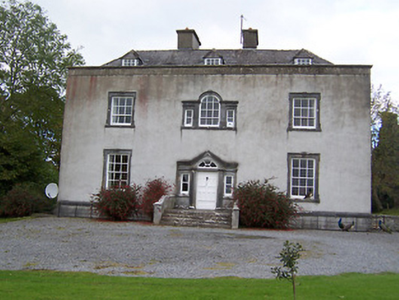
| Rosemount House/Oldcourt | Rose Mount House is also known as Old Court, both names appear on the OS maps. The village nearby is known as Rosemount. Described by buildings of Ireland as a well-balanced structure originally built by the Geoghegan Family in the late eighteenth-century, probably replacing an earlier house. Leet records John Pim occupying a house named Rosemount near Moate in 1814 and Lewis records Lady Nagle as the occupant in 1837. O’Brien writes that it was inherited by the Nugent family of Ballinacor through marriage. At the time of Griffith’s Valuation it was occupied by John J Nugent who held it from the representatives of Sir Richard Nagle. It was valued at £21.10. Still extant and occupied. |
|
| Coolatore | This house was not built at the time of the first edition OS survey. It was constructed about 1866 and was the home of members of the Upton family. In 1906 it was valued at £56, occupied by Henry N S Upton who held it with over 400 acres of untenanted land. According to the discover Ireland website it now provides self-catering accommodation. |

|
| Grouse Lodge | Grouse Lodge is named on both the first 6 inch and 25 inch OS maps. Described as a three-bay two-storey over basement country house with attic level, built c.1810 (boi), now in use as a residential recording studio. Grouse Lodge was built by a branch of the Fetherstonhaugh Family of Ardagh, County Longford and was occupied by Theodore Fetherston in 1814 and by William Fetherstonhaugh at the time of Griffith’s Valuation. The building valued at £24 was held from Edward Fetherstonhaugh, who was the occupant in 1837. It is still a family home. |

|
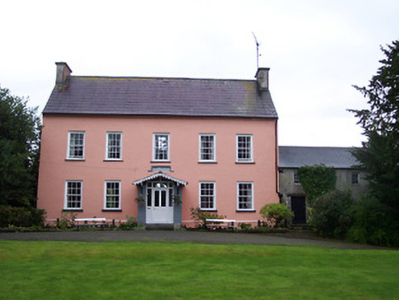
| Moate View | Moate View is situated on the outskirts of the town of Moate and predates much of the town. It is a detached five-bay two-storey house, built 1762, verified by a cut stone date stone inscribed ‘James Clibborn built this house anno domini 1762’. O’Brien writes that James Clibborn was the son of Joshua Clibborn and his wife Sarah Lecky. His second son William Cooper Clibborn inherited the house and was the occupant at the time of Griffith’s Valuation (publ. 1854) holding the building valued at £32 from Thomas H Mulock MP. It is still the home of Clibborn family members. |
|
| Bellanalack | Bellanalack is marked on the first edition OS map and the later 25 inch map but a much smaller building is now located on the site. The house was occupied by Christopher Adamson in 1837 and at the time of Griffith’s Valuation (publ. 1854). He held the property valued at £13 from Lord Castlemaine. | |
| Belville | O’Brien writes that Belville was built about 1775 for Richard Cuppaidge and by the early 1780s was occupied by the Jones family. It remained the Jones family home until at least the time of Griffith’s Valuation (publ. 1854) when Gustavus Jones Junior was resident. The house was valued at £23. It is now a ruin. | |
| Carn Park | Carn Park was built by the Adamson family in the late 18th century. Travers Adamson, son of William Gustavus Adamson was resident in 1814 and W G Adamson in 1837. At the time of Griffith’s Valuation (publ. 1854) the property was in Chancery, Robert Adamson was the occupant and the buildings were valued at £24. On 17 June 1870 when the house and lands were advertised for sale in the Land Court the house was described as a ‘commodious dwelling house (with suitable out offices) on Lot 1, which, although somewhat out of repair, is capable (at a moderate outlay) of being made a comfortable residence for a gentleman and his family. The house is prettily situated on the slope of a hill, commanding an extensive view’. It was bought by the Rev Thomas Thompson Gray of Dorrington, Drumraney, who was Vice Provost of Trinity College, Dublin, 1916-1924. The house was demolished in the mid-20th century. | |
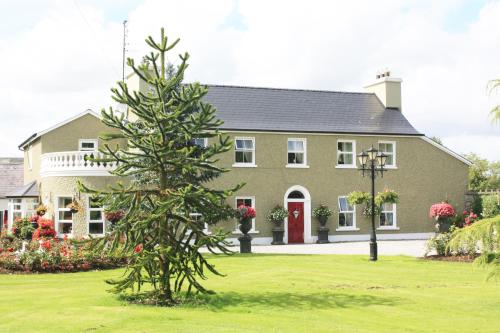
| Mount Temple House | Mount Temple House is marked on the first edition OS map, south of Holy Trinity Church and named on the 25 inch map. Leet records Richard Telford as resident at Mount Temple. At the time of Griffith’s Valuation (publ. 1854) Sarah Russell held the house and 182 acres from the Hon R T H Temple, the buildings were valued at £12. This house now provides accommodation for guests. See lodging-world.com/ei/hotels/mount-temple-house-in-moate-91944640. |
|
| Nahodmore House | This building is marked on the first edition OS map, altered and expanded on the 25 inch map. O’Brien states that it was built by the Adamson family. Leet records William Marsh as resident at Nahad in 1814. Valued at £11 Nahodmore House was occupied by Thomas Russell and held from John Trench at the time of Griffith’s Valuation (publ. 1854). William Woods Russell son of Mark Goodbody Russell and his wife Mary was born at Nahodmore in July 1855 (The British Friend, 9th month 1855, p 227). Mark Goodbody Russell and his daughter Mary were both living there in 1901. They were members of the Society of Friends while caretakers Alexander and Jane Elder for William W Russell were living there in 1911. This house, a short distance north west of Moate, is still extant. | |
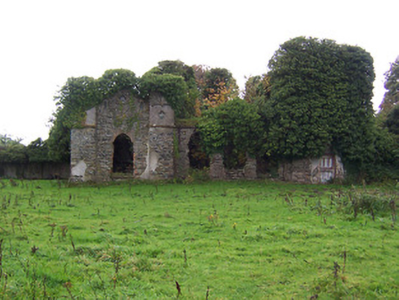
| Shurock | The Homan family appear to have settled at Shurock in the early 18th century. The original house at Shurock was built sometime in the eighteenth century, with a later single-storey Gothic wing added at the end of the eighteenth century. This house was the home of Captain Homan, about 1760 and of Sir W Jackson-Homan (barrister) in 1837. Sir William was created a baronet in 1801. The house is marked but not named on the first edition OS map and the building later expanded as shown on the 25 inch map. O’Brien states that the house was sold in the Encumbered Estates Court and it must have been purchased by George Fleming as he was the occupant at the time of Griffith’s Valuation (publ. 1854) holding it in fee. It was valued at £23. The house is now a ruin. |
|
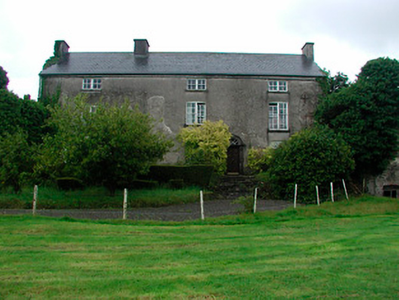
| Moate Castle | A complex structure, of at least three periods of construction, which dominates the centre of the town. It is a two-bay three-storey former fortified house/tower house, built 1550, having a three-bay three-storey wing to the west end, built c.1720 and a two-storey bowed extension to the east end, built c.1760, acquired by Captain John Clibborn in 1659 (boi). In 1814 Thomas C Clibborn occupied Moate-castle and in 1837 Moate Castle was the seat of Cuthbert J Clibborn. At the time of Griffith’s Valuation (publ. 1854) Gilbert Nugent was resident holding the property valued at £23 from the representatives of Cuthbert J Clibborn. Moate Castle has remained a private residence and was for sale in 2023. |
|
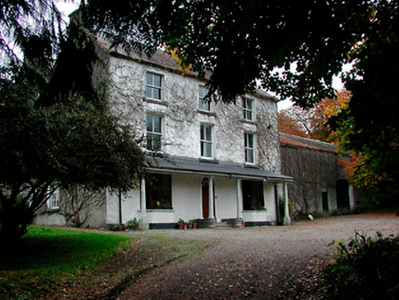
| Farnagh | Buildings are marked at this site on the first edition OS map and the house is named on the 25 inch map. It was built in the early 19th century and a Mr Benjamin Wynne was resident in 1814. The house was extended about 1850 according to the National Built Heritage Service. This house was the residence of R. Adamson in 1837 (Lewis) and of Hannah Wynne who held it from Edward Digges La Touche, valued at £14.5 at the time of Griffith’s Valuation (publ. 1854). Edward Wakefield, a ‘gentleman farmer’ and his family were resident in the early 20th century. This house remains a family home. |
|
| Hall | Hall House is described by O’Brien as a two-storey five-bay Georgian house. It was built by the Clibborn family. The Taylor and Skinner maps of the late 1770s record the Clibborns at The Hall. Valued at £25 at the time of Griffith’s Valuation (publ. 1854) it was occupied by William Malcomson who held it from Thomas Clibborn. Later occupied by Thomas B Wakefield who died in 1898. The house was a ruin for many years but is now demolished. | |
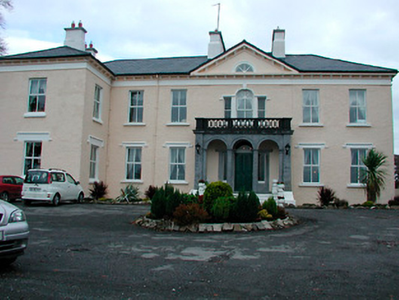
| Castledaly/Kilcleagh Park | Detached six-bay two-storey over basement country house, built 1776 by the Dalys. It replaced an early fortified house dating from the 1600s. A projecting two-storey wing was added about 1880 by the Odells. In 1814 and 1837 it was the seat of Joseph Morgan Daly. It was sold in the Encumbered Estates Court in 1850 and bought by a Scotsman George McDonnell who held it in fee at the time of Griffith’s Valuation (publ. 1854) when it was valued at £40. In the 1860s it was bought by Thomas Scruton Odell and it remained in the possession of the Odell family until 1961 when it was sold to the Land Commission. It was later renamed Kilcleagh Park when it became a hotel. Now known as Castledaly Manor and in use as a Christian Centre. |
|
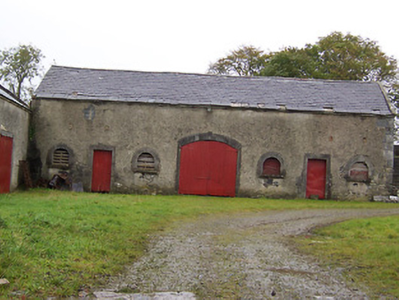
| Moyvoughly | Moyvoughly named Moyvoughly Lodge on the first edition OS map and Moyvoughly House on the 25 inch map. O’Brien writes that this was originally Arabin land purchased towards the end of the 18th century by the Grogans. This house was constructed by 1837 as C Arabin was resident, who was probably leasing it from the Grogans. By the time of Griffith’s Valuation (publ. 1854) John Ennis had acquired the house and lands as he is recorded as holding the property in fee . O’Brien writes that he rented the house to William Dargan, the railway entrepreneur, who was building the Mullingar to Dublin railway line and that the land was used to graze and accommodate the horses used in this work. In the mid-1850s Moyvougly was leased to Thomas Maher who eventually purchased the estate. Bought by the Fallon family in the 20th century, the house is now demolished but some outbuildings and stables survive. |
|
| Umma or Emoe House | Umma or Emoe House is named on the first edition OS map. It was a Magan home from at least the early 18th century. Thomas Magan was resident in 1814. O’Brien writes that Francis Magan was the last family member to reside at Emoe. It was recorded as his seat in 1837. He died in 1841. At the time of Griffith’s Valuation (publ. 1854) James Hill Shaw held the house valued at £15 from George A Boyd. Another building with the same name is marked on the 25 inch map to the south east of the original house and is still extant (N198 453). This second house was built in 1900 (O’Brien) by the Shaw family. James Shaw of Ballymahon purchased the lands in 1875. Occupied by the Skelly family in the 20th century. | |
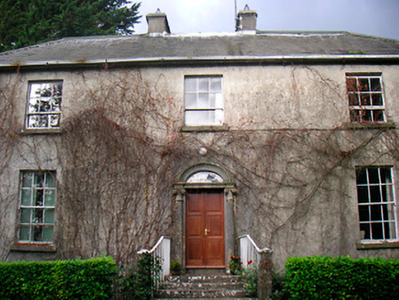
| Glenown/Clonown | Clonown is named on the first edition OS map. It is a three-bay two-storey over basement house, built c.1815 now known as Glenown (boi). At the time of Griffith’s Valuation (publ. 1854) Richard Fitzgerald was resident, holding the house valued at £18 in fee. In the mid-1870s his son Captain James is recorded at Clonown. |
|
| Mosstown | Mosstown House named on both the first edition OS map and the 25 inch map. O’Brien writes that Mosstown was originally a property belonging to the Judge family and was sold to Cuthbert Fetherstonhaugh in 1790 and he was recorded as occupant in 1814. In 1837 it was recorded as ‘the principal seat’ of the parish ‘the handsome residence of Theobald Fetherston H.’ It remained a Fethetstonhaugh property until sold to William Dargan in the Encumbered Estates Court in 1851 (O’Brien). At the time of Griffith’s Valuation (publ. 1854) it was valued at £40 and occupied by Thomas Smith who held it from William Dargan. Later this house was occupied by members of the Fosberry and Adamson families. In 1906 George A G Adamson was the occupant. The house was destroyed by fire in 1938 and is now a green field site. | |
| Ballinlaban | Buildings are marked at this site on the first edition OS map, now an extensive farming complex. At the time of Griffith’s Valuation (publ. 1854) a house valued at £18 was occupied by William Colgan who held the property from the representatives of Sir Richard Nagle. | |
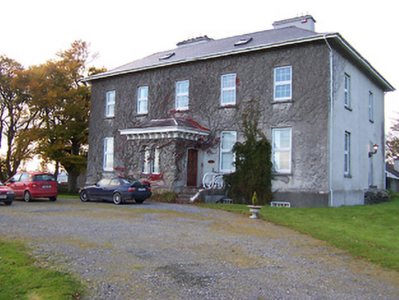
| Streamstown House | Streamstown House, just north of the Mullingar to Athlone greenway and marked on the first edition OS map, is a five-bay two-storey over basement country house, built c.1820 (boi). The interest of John Thomas Barlow, assignee of James Nugent, in the mansion house and lands of Streamstown were for sale in the Encumbered Estates Court on 12 February 1852. The property was held under a lease for lives for ever, the last renewal in 1846 was from William Palmer to John Thomas Barlow. At the time of Griffith’s Valuation (publ. 1854) Streamstown was the residence of Captain James H Dickson, valued at £20 and held from William Palmer. By 1906 Anne Somers was in occupation. |
|
| Temple House | Temple House, Templemacateer, is located on an old abbey site and very close to the border with County Offaly, it is named on the first edition OS map. This three-bay two-storey house was built in the mid-18th century and altered c.1840 (boi). It was originally the home of the Handy family. Dennis Kelly was the occupant in 1814. Marcus Kelly was resident in 1837 and at the time of Griffith’s Valuation (publ. 1854) when the house was valued at £12 and held from the representatives of Samuel B Handy. It was the home of John Mark Kelly, a farmer, magistrate and land commissioner and his wife in 1901. Now in use as a guesthouse run by the Fagan family, see https://templemacateer.booking.site/en | |
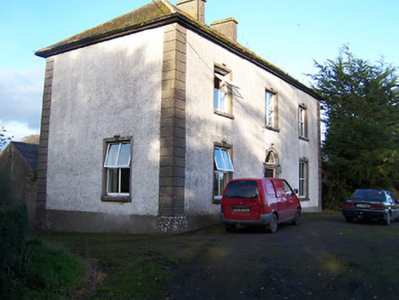
| Rockfield | Rockfield is named on the first edition OS map, this three-bay two-storey house was built c.1785. For sale in 1853 when the 'mansion house' was not in full repair. Mark Colgan was the tenant. It was held on a lease from Nicholas and Francis Evans. At the time of Griffith’s Valuation (publ. 1854) it was occupied by Marcus Colgan and held from John Elliott. It was valued at £13. Joseph Clavin, farmer and his family were the occupants in the early 20th century. This house is till part of a farm complex. |
|
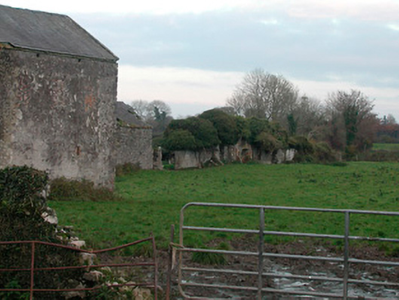
| Bracca Castle/Coolalough House | Coolalough House, also known as Bracca Castle, close to the village of Horseleap is named on both the first six inch and 25 inch OS maps as Coolalough. The first edition six inch map shows a castle in the townland. The estate was granted to the Handy Family in the mid-seventeenth century. Coolalough House was later a base for the Methodists in the area. Wesley records in his letters in 1785 that the Handy Family had recently built a new property at Coolalough, apparently (re)named Bracca Castle (boi). Samuel W Handy was occupying Bracca Castle in 1814 and Samuel Handy is listed as the owner of Bracca Castle in 1837. By the time of Griffith’s Valuation (publ. 1854) Joseph Hackett was occupying the house, valued at £10 and held from the representatives of Samuel W Handy. Home of Katherina Lett, a married lady, and two servants in 1911. This house is no longer extant, a green field site. |
|
| Ardnagragh | Alicia Nugent was leasing this property, which included a mill, from the Digby estate at the time of Griffiths Valuation in the early 1850s, when it was valued at £23. The National Inventory of Architectural Heritage indicates that the house is still in use though the mill has been demolished. | |
| Drumraney | This property is described as “in chancery” at the time of Griffiths Valuation, though it was being leased by John Carney from the estate of Alicia O’Connor Malone. It was valued at £14. It is labelled as Drumraney House on the 1st edition Ordnance Survey map of 1838 but as “Constabulary barracks” on later edition maps. It is not extant now. | |
| Newgrove [Badgersbridge House] (Ballymahon) | This property was held in fee by Dillon Kelly at the time of Griffiths Valuation, when it was valued at over £10. It is labelled Newgrove or Badgersbridge House on the 1st edition Ordnance Survey map but does not appear on subsequent maps. The Valuation Office books show that the house had been valued at £15 in 1840. | |
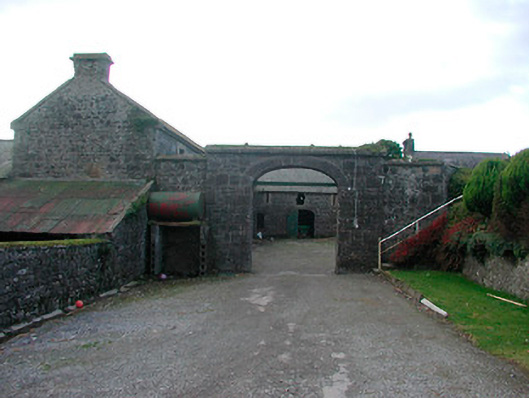
| Dorrington House | At the time of Griffiths Valuation St. George Gray held this property in fee when it was valued at £32. It is labelled Dorrington House on all editions of the Ordnance Survey maps. In 1906 it was the property of Wellington Gray and valued at £44. O'Brien writes that the house was demolished during the twentieth century and a newer house constructed at the site but extensive estate architecture survives. |
|
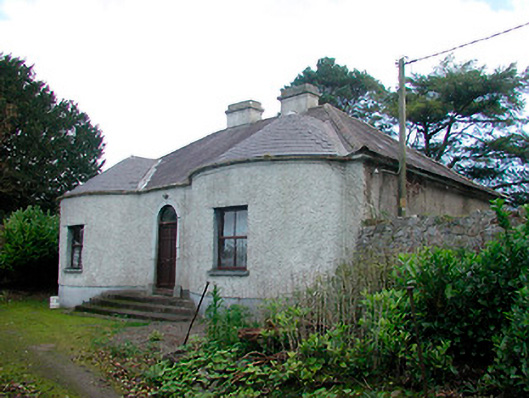
| Walderstown Lodge | William Potts was leasing this property from the Gray estate at the time of Griffiths Valuation in the early 1850s, when it was valued at £12. O'Brien writes that it was possibly built by the Dorrington Hackett family of nearby Dorrington House. It was acquired by the Gray family by inheritance and became a dower house. It is still extant. |
|
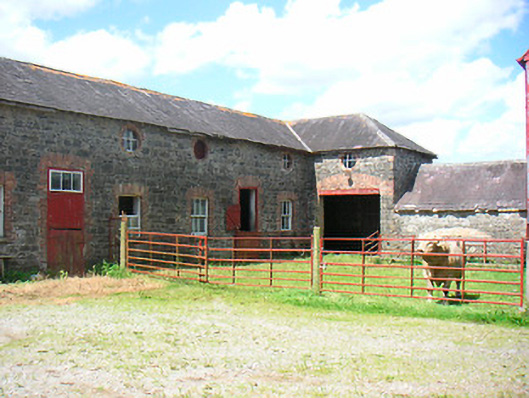
| Belmore Place | At the time of Griffiths Valuation in the early 1850s this property was held in fee by Robert W. Lowry, when it was valued at £16. It is labelled Belmore Place on all editions of the Ordnance Survey maps. O'Brien writes that the original house at this site had been occupied by Netterville Blake, who sold the property to Lowry in 1832. The National Inventory of Architectural Heritage suggests the surviving farm complex was built c.1850. The house was demolished in the 20th century. |
|
| Ballymore Parochial House | Thomas Coffey was leasing this property to Reverend Thomas Guinan at the time of Griffiths Valuation when it was valued at £12. A smaller house appears at this location on the 1st edition map of 1838 but a house labelled “Parochial House” is shown on the early 20th century 25-inch edition. Buildings still extant at site but may not be original. | |
| Lissanode House | O'Brien writes that this house was occupied by the Russell family, probably from the early part of the eighteenth century. At the time of Griffiths Valuation, in 1854, it was occupied by Frederick W. Russell, leasing from the Boyd estate, when it had a valuation of £7. It was replaced by a more substantial house in the late nineteenth century following a fire. It is still extant. | |
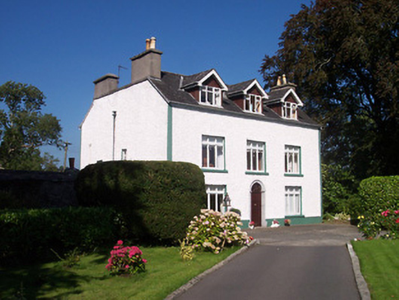
| Jones Lake | A house south of the railway line and a short distance west of Moate in the mid-19th century. O'Brien writes that it was built by the Jones family in the mid-18th century as a two storey, three bay building. Leet records William Gustavus Jones as resident in 1814. Occupied by John Sills at the time of Griffith's Valuation (publ. 1854) and held from Patrick Dillon Irwin with about 50 acres, when it was valued at £13. |
|