

Littletown House [Lodge]
Houses within 5km of this house
Displaying 8 houses.
Houses within 5km of Littletown House [Lodge]
Displaying 8 houses.
| House name | Description | |
|---|---|---|
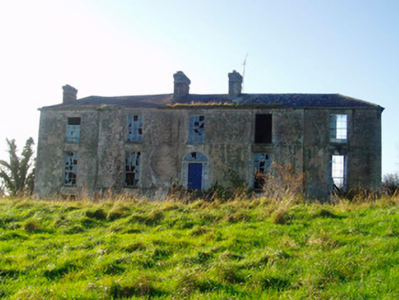
| Auburn | Auburn - Detached five-bay two-storey over raised basement house, built or rebuilt in the early 19th century (boi) This house takes its name from the Goldsmith Poem ‘The Deserted Village’, which was apparently inspired by the countryside surrounding this property where Goldsmith grew up as a boy. Auburn House was reputedly remodeled in the early nineteenth-century by John Hogan, whose father, a solicitor, acquired the property and estate from the Naper Family (of Loughcrew, Oldcastle, Co. Meath) in settlement of legal costs. J Hogan was the occupant in 1837. It was later sold to William Henry Daniel c.1848 and later to G.A.G. Adamson in 1864. In 1906 the buildings were valued at £34 and Charles G Adamson was the occupier. The Adamson family continued to reside at Auburn until about 1980. The house is now a ruin. |
|
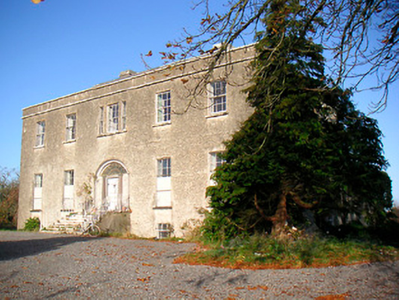
| Harmony Hall | O’Brien writes that Harmony hall was built in 1788 by Colonel William Caulfield, a member of a branch of the Caulfield family, Earls of Charlemont. In 1842, Colonel John Caulfield sold the house to Arthur Dunn Chaigneau and purchased Bloomfield House, Mullingar. Griffith’s Valuation records Chaigneau as the occupant and that the house was valued at £50. The National Inventory of Architectural Heritage states that the house was built by the Handcock Temple family. Occupied by Edward Molony Gleeson of the Athlone Woollen Mills in the 1880s. Occupied by the Fox, Wilson and Fitzsimons families in the 20th century. |
|
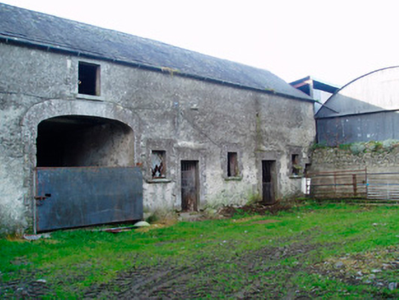
| Lackan Lodge | O’Brien writes of Walter Dillon living at Lackan in 1796. Lackan Lodge, valued at £14, was occupied by William Thomson in the mid-19th century. He held the property from the Dillons minors. A new building has been erected on this site. |
|
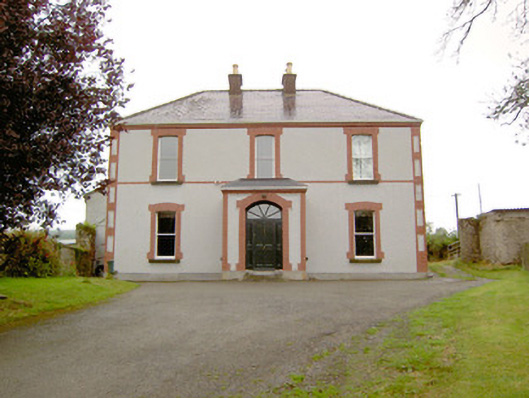
| Rathmore House (Ballymahon) | Robert C. Barbar was occupying this property, then valued at over £12, at the time of Griffiths Valuation. Lewis had also noted it as his seat in 1837. It was leased from the King Harman estate. This property was labelled Rathmore House on the 1st edition Ordnance Survey map but a later house (Grid Reference N150546) carries this label on the 25-inch edition of the early twentieth century. The latter is still extant. |
|
| Drumnacor House | At the time of Griffiths Valuation in the 1850s, John Bond held this property in fee when it was valued at £15. In 1837 Lewis had recorded Drumnacor as the residence of W. Sandys. In 1906 it was owned by John Bond’s representatives. The site is now occupied by a farmyard. | |
| Annaville House | Francis Longworth was leasing this property from William Dawson at the time of Griffiths Valuation in the early 1850s, when it was valued at almost £14 and included a mill. On the 25-inch Ordnance Survey map of the early 20th century it is labelled Annaville House. A house is still extant at the site. | |
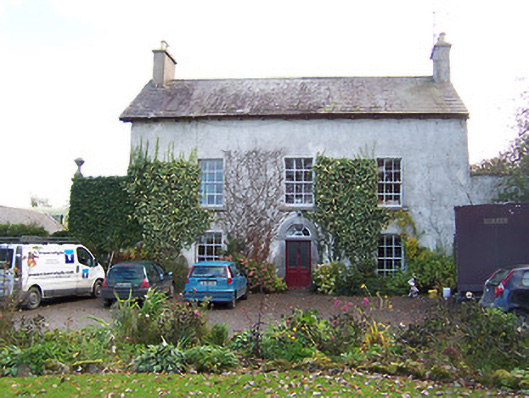
| Noughaval House (Ballymahon) | William Dawson was leasing this property from the King-Harman estate at the time of Griffiths Valuation in the early 1850s when it was valued at £13. Lewis also referred to it as his seat in 1837. The National Inventory of Architectural Heritage suggests it was built in 1760. O'Brien notes that there is a family tradition that the roof had to be replaced in the nineteenth century having been damaged during ''the Night of the Big Wind'' in 1839. Noughaval is still extant and occupied. |
|
| Lissaquill House | In 1837 Lewis referred to Lissaquill House as the seat of Harding Fetherstone. At the time of Griffiths Valuation in 1854 this property was occupied by John Hogan, leasing from O'Brien Dillons, when it was valued at £9. The Valuation Office Books of 1841 noted the house here as having a valuation of £10 and occupied by Harding Fetherstone. A house and farm are still extant at this location. |