

Dysart
Houses within 5km of this house
Displaying 11 houses.
Houses within 5km of Dysart
Displaying 11 houses.
| House name | Description | |
|---|---|---|
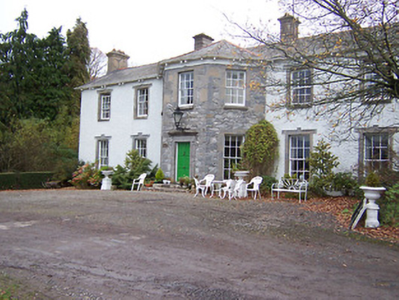
| Reynella | Reynella House is a seven-bay two-storey country house on T-shaped plan built about 1770 by Richard Reynell. In 1814 it was the seat of Richard M Reynell and in 1837 Lewis records that Reynella was 'the elegant residence of the late R. M. Reynell, Esq., now the property of a minor, situated in a fine demesne, adorned with a lake and extensive plantations'. Valued at £27 it was occupied by John Rynd at the time of Griffith’s Valuation (publ. 1854) and held from Blayney T Balfour. This house was home to the broadcaster Marian Finucane and her husband in the 1980s and was a guest house in more recent years. |
|
| Clonyn House | Clonyn/Clonin House, (also known as Clonyn or Delvin Castle) is named on the first edition OS map with a riding school to the rear and is recorded as ‘in ruins’ on the 25 inch map. A plaque with the crest of the Nugent family on the façade dates the building 1680. Later extensions to the house dating from the early 18th century to the early 19th century are evident. This was the home of the Earls and Marquess of Westmeath and in 1837 is described as such by Lewis. The first and only Marquess of Westmeath died in 1871 and his estates were inherited by his daughter Rosa, who was married to Lord Greville. However, by the time of Griffith’s Valuation (publ. 1854) Lord Greville was already in possession of Clonyn holding it in fee and valued at £60. By 1906 the buildings were valued at £130.3 and held with 824 acres of untenanted land however the estate was ‘In Chancery’. The Hon Priscilla Nugent was the occupant. The house became a ruin some years later and is now surrounded by Delvin Golf course. | |
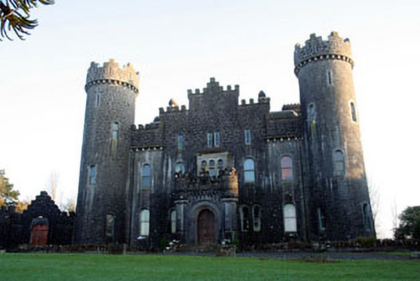
| Clonyn Castle | Clonyn Castle, five-bay two-and three-storey over basement Gothic Revival-style castle, built between 1867-1876 to the design of John McCurdy (1823-85) for Lord and Lady Greville-Nugent, both of whom died in 1883. Their sons followed careers in England and Australia and the house was only occupied by servants at the time of the 1901 census. Sold by the Grevilles in the 1920s this building remains a private residence. |
|
| Mitchelstown | Mitchelstown House was a home of the Tighe family in the early 19th century. Robert S Tighe was the occupant in 1814. Home of G Hinds in 1837 and at the time of Griffith’s Valuation (publ. 1854) of Captain John Roden who held the house, valued at £24 from Robert Howard. The house appears to be a ruin on the 25 inch map. | |
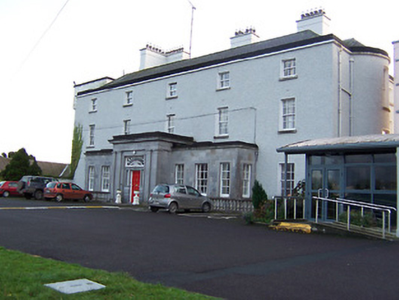
| Southhill | Southhill, a five-bay three-storey over basement country house, built about 1810 (boi). South Hill was originally the home of the Tighe Family. In 1814 Major Robert Tighe was occupying Southhill. By 1837 it had passed into the ownership of William Chapman, a younger son of Sir Thomas Chapman 2nd Bt of Killua Castle and grandfather of ‘Lawrence of Arabia’. He held the house in fee at the time of Griffith’s Valuation (publ. 1854) when it was valued at £41.15. In 1906, Francis V Chapman was recorded as the occupier but by 1911, Peter P Metge, a civil engineer and farmer, was resident with his family. This house has been a convent, hospital and is now the home of St Mary’s Special School. |
|
| Derry Cottage/Drumcree Cottage | Drumcree Cottage (also known as Derry Cottage) is named on the first edition OS map. Lewis records Derry Cottage as the home of Mrs Berry in 1837. Griffith’s Valuation (publ. 1854) records Letitia C Berry (nee Smyth) as resident in a house valued at £20 and held from Robert Smyth. A building still stands on the site. | |
| Dardistown | Dardistown, described by O’Brien as a two-storey, three-bay Georgian house, a Fetherstonhaugh home in the late 18th century. In 1837 Lewis records ‘Durdistown’ as the seat of Theobald Fetherstonhaugh. By the time of Griffith’s Valuation (publ. 1854) the Metge family was in possession. John Branigan held the house valued at £12 from John C ‘Medge’ Metge. The Simons family were living in a first class house at Dardistown at the beginning of the 20th century. Buildings still occupy the site. | |
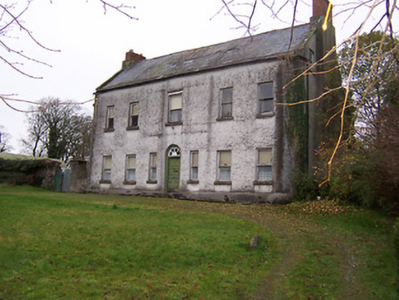
| Killagh House | Killagh House, named on the first edition OS map with a tuck mill and two corn mills closeby. This five-bay two-storey house was built about 1740 and a three-storey tower house is connected to the rear. At the time of Griffith’s Valuation (publ. 1854) it was valued at £10, occupied by Patrick Connell and held from Sir John Nugent. This building is no longer in use. https://www.antaisce.org/killagh-house-killeagh |
|
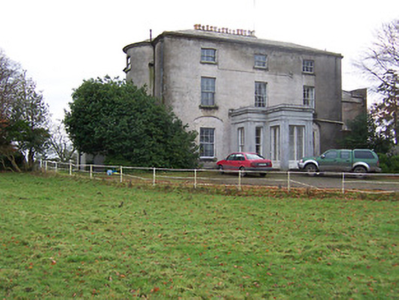
| Rockview House | Rockview House is a three-bay three-storey building over a basement. It was built in the early 19th century (but not recorded by Leet) for the Fetherstonhaugh family. In 1837 Mrs Richard Fetherstonhaugh was resident. At the time of Griffith’s Valuation (publ. 1854) her son Richard occupied the house, valued at £70 and held from Thomas J Fetherstonhaugh. The Fetherstonhaugh family continued to occupy the house well into the 20th century and it remains a private residence. |
|
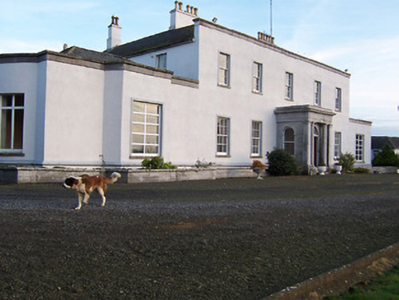
| Bracklyn House | On the first edition OS map Bracklin House is set in an extensive demesne with gardens, plantation and outbuildings. It is a five-bay two-storey over basement neoclassical country house, built in the late 18th century by a branch of the Fetherstonhaugh family on land acquired from the Pakenham Family of Tullynally Castle, Castlepollard. Single storey wings were added in 1910. James Fetherstonhaugh was resident in 1814 and his son Thomas James in 1837. At the time of Griffith’s Valuation (publ. 1854) Anne Gavan was the occupant holding the house valued at £70 from Thomas James Fetherstonhaugh. At the beginning of the 20th century Captain Cecil Howard Digby Fetherstonhaugh and family lived at Bracklin. In 1906 the buildings were valued at £60 and held with 2,300 acres of untenanted land. O’Brien writes that in recent times Mr and Mrs Sean Murphy have restored the house. |
|
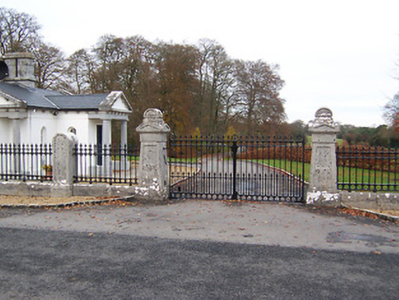
| Gigginstown House | The original house, Gigginstown Lodge, was a Dardis home and is marked on the first edition OS map. It was occupied by Christopher Dardis in 1814 and Captain Brabazon O’Connor in 1837, who had married the widow of Michael Dardis. It is no longer extant (N528 615). Gigginstown House is described by O’Brien as ‘a two-storey, three-bay classical house designed by John S Mulvany’ built in the mid-1850s on a new site and recorded as unfinished at the time of Griffith’s Valuation (publ. 1854). Valued at £40, Elizabeth Busby was the occupant holding the house in fee. The property had been bought on her behalf and that of her sister in 1828. Alphonso Busby owned 1,408 at Gigginstown in the 1870s. James Taylor, farmer and his wife Kate were resident in the early 20th century. A stud and farm are now located at Gigginstown House, owned by Michael O’Leary, see https://www.gigginstownhouse.com/wp/ |
|