

Bracklyn House
Houses within 5km of this house
Displaying 12 houses.
Houses within 5km of Bracklyn House
Displaying 12 houses.
| House name | Description | |
|---|---|---|
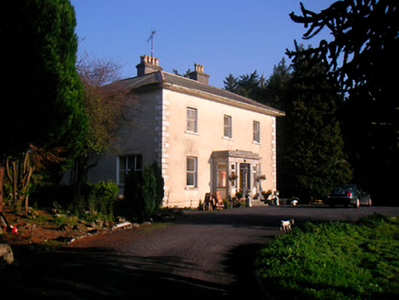
| Corbetstown | Corbetstown house, a D’Arcy home, is named on the first edition OS map. It is a three-bay two-storey over basement house, built about 1820. It must have replaced an earlier house as a D’Arcy is recorded at Corbetstown in the late 1770s. Francis D’Arcy was resident in 1814 and John D’Arcy in 1837. By the time of Griffith’s Valuation (publ. 1854) Joseph Purser was resident holding the house valued at £32 from the Earl of Longford. Occupied by Elizabeth and Frances Reynell in 1911, this house remains extant. |
|
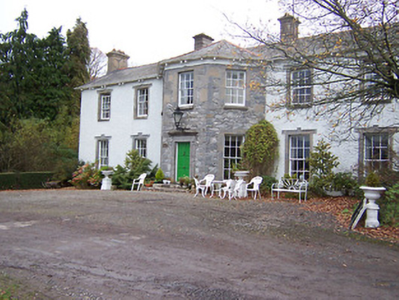
| Reynella | Reynella House is a seven-bay two-storey country house on T-shaped plan built about 1770 by Richard Reynell. In 1814 it was the seat of Richard M Reynell and in 1837 Lewis records that Reynella was 'the elegant residence of the late R. M. Reynell, Esq., now the property of a minor, situated in a fine demesne, adorned with a lake and extensive plantations'. Valued at £27 it was occupied by John Rynd at the time of Griffith’s Valuation (publ. 1854) and held from Blayney T Balfour. This house was home to the broadcaster Marian Finucane and her husband in the 1980s and was a guest house in more recent years. |
|
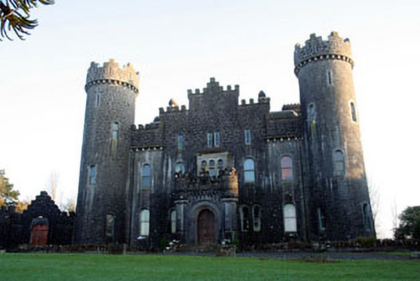
| Clonyn Castle | Clonyn Castle, five-bay two-and three-storey over basement Gothic Revival-style castle, built between 1867-1876 to the design of John McCurdy (1823-85) for Lord and Lady Greville-Nugent, both of whom died in 1883. Their sons followed careers in England and Australia and the house was only occupied by servants at the time of the 1901 census. Sold by the Grevilles in the 1920s this building remains a private residence. |
|
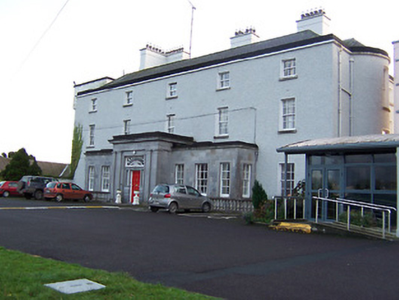
| Southhill | Southhill, a five-bay three-storey over basement country house, built about 1810 (boi). South Hill was originally the home of the Tighe Family. In 1814 Major Robert Tighe was occupying Southhill. By 1837 it had passed into the ownership of William Chapman, a younger son of Sir Thomas Chapman 2nd Bt of Killua Castle and grandfather of ‘Lawrence of Arabia’. He held the house in fee at the time of Griffith’s Valuation (publ. 1854) when it was valued at £41.15. In 1906, Francis V Chapman was recorded as the occupier but by 1911, Peter P Metge, a civil engineer and farmer, was resident with his family. This house has been a convent, hospital and is now the home of St Mary’s Special School. |
|
| Dardistown | Dardistown, described by O’Brien as a two-storey, three-bay Georgian house, a Fetherstonhaugh home in the late 18th century. In 1837 Lewis records ‘Durdistown’ as the seat of Theobald Fetherstonhaugh. By the time of Griffith’s Valuation (publ. 1854) the Metge family was in possession. John Branigan held the house valued at £12 from John C ‘Medge’ Metge. The Simons family were living in a first class house at Dardistown at the beginning of the 20th century. Buildings still occupy the site. | |
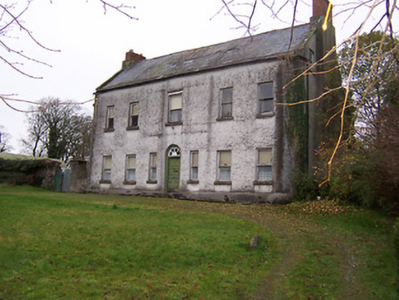
| Killagh House | Killagh House, named on the first edition OS map with a tuck mill and two corn mills closeby. This five-bay two-storey house was built about 1740 and a three-storey tower house is connected to the rear. At the time of Griffith’s Valuation (publ. 1854) it was valued at £10, occupied by Patrick Connell and held from Sir John Nugent. This building is no longer in use. https://www.antaisce.org/killagh-house-killeagh |
|
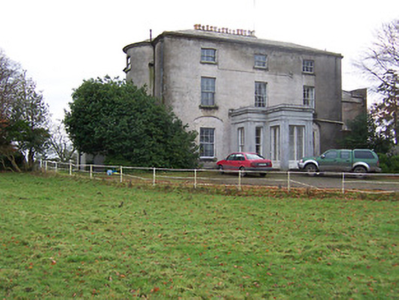
| Rockview House | Rockview House is a three-bay three-storey building over a basement. It was built in the early 19th century (but not recorded by Leet) for the Fetherstonhaugh family. In 1837 Mrs Richard Fetherstonhaugh was resident. At the time of Griffith’s Valuation (publ. 1854) her son Richard occupied the house, valued at £70 and held from Thomas J Fetherstonhaugh. The Fetherstonhaugh family continued to occupy the house well into the 20th century and it remains a private residence. |
|
| Sallyview | Sallyview is mentioned in The Parliamentary Gazetteer of 1846 but no occupant is given. The building is marked on the first edition OS map and named Sallyview although altered in shape on the 25 inch map. Valued at £14.10 at the time of Griffith’s Valuation (publ. 1854), occupied by John and Christopher Plunkett and held from Michael Plunkett, now a green field site. | |
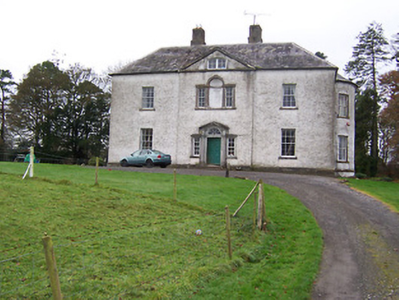
| Dysart | Dysart, located south of Delvin, is a three-bay two-storey over basement Palladian house built about 1757, for the Ogle family to designs by George Pentland. In 1814 and 1837 Nicholas Ogle was resident. By the time of Griffith’s Valuation (publ. 1854) Henry Ogle was the occupant holding the house valued at £25 in fee. The Ogle family still live here. |
|
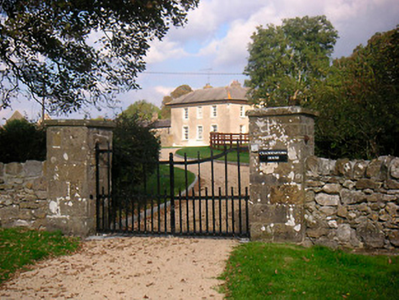
| Craddanstown House | A building is marked on the first edition OS map at this site which is greatly expanded and named on the 25 inch map as Craddanstown House. The originally house probably dates from the early 19th century and the building was extensively altered sometime in the mid-19th century. Valued at £10 and occupied by James Gibson at the time of Griffiths Valuation (publ. 1854), when it was held from the Earl of Longford. James Gibson and family were still resident at the beginning of the 20th century. |
|
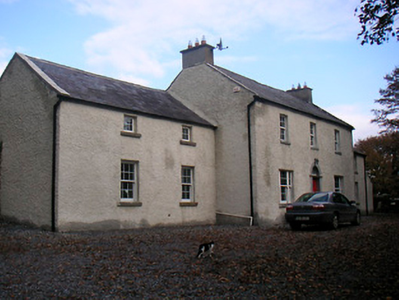
| Craddanstown Lodge | Craddanstown Lodge is named on the first edition OS map as Craddanstown House, and on 25 inch as Craddanstown Lodge. It is a three-bay two-storey house, built about 1800, with two storey wings on each side. Craddenstown House was the home of Lockhart Ramage in 1814 and 1837 so must refer to the Lodge. Lockhart Ramage was resident at the time of Griffith’s Valuation (publ. 1854), when the house was valued at £17 and held from the Earl of Longford. The census of 1911 records Lockhart Ramage aged 82, gentleman farmer, as head of the household. O’Brien writes that the house was sold in 2013 and it was on the market again in 2017. This house was more substantial than the other Craddanstown until the other was altered about 1860. |
|
| Grange More House | Grange More House, located in a large demesne on the first edition OS map. It was a five-bay three-storey over basement house, built in 1823 by John Fetherston inherited by his nephew Edward Briscoe of Riverdale (O’Brien). There must have been an earlier house as the Taylor and Skinner maps of the late 1770s mention Grangemore of Fetherston Esq. Leet records John Fetherston of Grangemore, Killucan in 1814 and it was the seat of Edward Briscoe in 1837 when it was described as 'a handsome house in a well-planted demesne'. Valued at £60 it was occupied by Captain William Graham at the time of Griffith’s Valuation (publ. 1854) and held from the Briscoes minors. The mansion house at Grange More was in the occupation of Augusta E Magan in 1906 [she had died in 1905] who held it with 1,922 acres of untenanted land. It is now a ruin. |