

Robinstown
Houses within 15km of this house
Displaying 12 houses.
Houses within 15km of Robinstown
Displaying 12 houses.
| House name | Description | |
|---|---|---|
| Ballyhaise | Ballyhaise built for Colonel Brockhill Newburgh, design attributed to Richard Castle but more likely Sir Edward Lovett Pearce, early 18th century. About 1800, sold to William Humphrys who added two storey wings to the building. Lewis describes the house in 1837 as ‘a spacious mansion, with an elevated front curiously ornamented with arches’. It was the seat of William Humphrys. In the 1850s, the buildings had a rateable valuation of £110. Since 1905, Ballyhaise has been an agricultural college. | |
| Ardue House | Ardue House was the home of the Clemengers, a family of German origin, throughout the 19th century. Mr Clemenger was resident in 1814 and Alexander Clemenger in the 1850s when the house was valued at £13 and held from James H. Story. Henry Taunt Clemenger and his unmarried son John James were resident in 1911. The house was located between Killywilly Lough and Tomkinroad Lough. The site is now a green field. | |
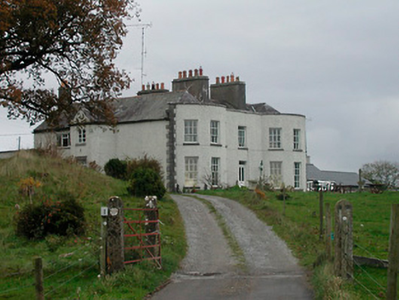
| Cornaher | Cornaher House, named on the first edition OS map, is a two-storey seven-bay country house, built in the early 19th century by the Rev John Vignoles, of Hugenot decent. He married a member of the Lowe family who previously owned the property. It was the home of the Rev. Charles Vignoles in 1814 and 1837, who was rector of the nearby Newtown Church of Ireland church. His sons Thomas and Samuel were in residence at the time of Griffith’s Valuation (publ. 1854) when the house was valued at £32. The Rev Charles Vignoles died at Cornaher in 1877. It was occupied by William George Lowe and family in 1901 and by the Davis family in 1911. Since then it has had a number of owners, been in use as an organic farm and Bed and Breakfast and was for sale in 2022. |
|
| New Forest | New Forest is a five-bay three-storey over basement country house, built in the 1770s by the Evans family and acquired by Henry Daniel before the end of the century. In 1837 New Forest was the home of a H. Daniel described by Lewis as ‘one of the most complete and gentlemanly residences in the county of Westmeath’. In 1843 Henry was succeeded by his son Robert Daniel who Griffith’s Valuation (publ. 1854) records was the occupant holding the house valued at £55 from Francis Evans. When the Evans estates in counties Mayo, Monaghan and Westmeath were for sale in the Landed Estates Court in November 1871, Newforest was described as forming 'one of the most complete and gentlemanly residences in the county of Westmeath'. (LEC rental 14 November 1871). O’Brien writes that the Daniels bequeathed the estate to the Catholic Church in the 20th century. It was sold in 1948 to Lt-General Sir Charles Gairdner, who was later appointed Governor of Western Australia (1951–1963) and then Governor of Tasmania (1963-68). Its extensive mature landscaped grounds are now in use as a golf course and the house is a hotel see https://newforest.ie/ | |
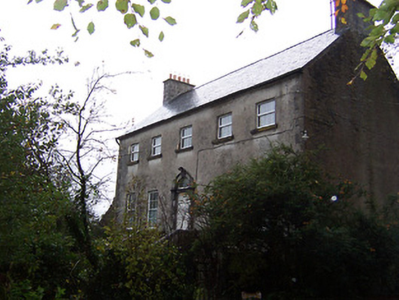
| Guilford House | This land was originally the property of the North family who were connected to the Earls of Guilford. A five-bay two-storey house over a raised basement, built in the late 18th century, possibly by the Reynolds family, but was leased to the Usher family by the end of the century. Occupied by Christopher Coffie/Coffey junior in 1814 and by F. Usher in 1837. At the time of Griffith’s Valuation (publ. 1854) Christopher Swift held the house valued at £12 from Francis Usher. O’Brien writes that the Reynolds family still own Guilford House. |
|
| Templeoran House | Templeoran House, named on the first edition OS map, this was a two-storey, five-bay late 18th century house which O’Brien states has been an ivy covered ruin for many years. In 1837 Mrs Johnson was resident and at the time of Griffith’s Valuation (publ. 1854) the house was the home of Edward Fetherstonhaugh, valued at £8.10 and held from George A Boyd. | |
| Tore | This house is named Toor on the first edition OS map and Torr on the 25 inch map. Located a short distance south east of Tyrrellspass, it was a two-storey, five-bay 18th century house, built by the Pilkington family and marked on the Taylor and Skinner map of the late 1770s. Henry Pilkington of Tore was a subscriber to Lewis’ Topographical Dictionary. The house was occupied by him at the time of Griffith’s Valuation (publ. 1854). Valued at £25 it was held from Charles B Marlay. Henry Mulock Pilkington of Tore owned 1,683 acres in county Westmeath in the 1870s. The house was burnt in the early 1920s and is now a ruin. | |
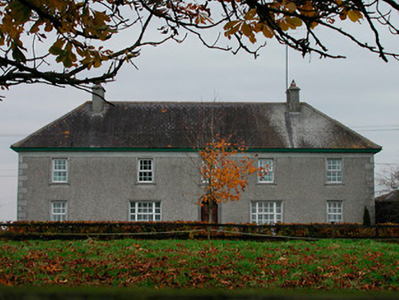
| Ballard | Ballard House, named on the first edition OS map as Lauree, but on the 25 inch as Ballard, located to the south west of Kilbeggan. It is a five-bay two-storey over basement house, built or rebuilt about 1830 (boi). In 1814 W Battersby was resident and in 1837 R Bolger. By the time of Griffith’s Valuation (publ. 1854) Sylvester Lalor occupied the house valued at £10 from Dr Richard P O’Reilly. The Lalor family still live at Ballard where they run an organic farm. |
|
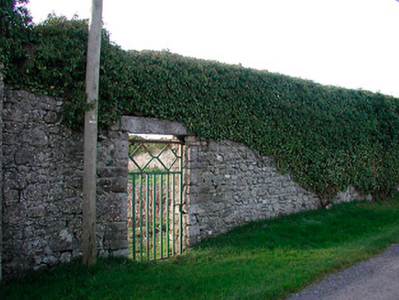
| Moycashel | Located on a side road south west of Kilbeggan, Moycashel was the home of the Holmes family from the mid-19th century. It is not marked on the first edition OS map. At the time of Griffith’s Valuation (publ. 1854) Robert Holmes held the house valued at £16.10 in fee. It appears to have been occupied by William Serviss and family in 1901. A building remains on this site. |
|
| Rostalla | Rostalla, marked but not named on the first edition OS map, named on the 25 inch map. In 1837 Rostalla was the home of Dr Naghtan. At the time of Griffith’s Valuation (publ. 1854) this house, valued at £18 was occupied by the Rt Hon H Parnell, who held it in fee. In 1901 George Graham, a farmer, and his family were resident. This house is no longer extant, as a large business complex is on the site. | |
| Rahugh House | Located close to a graveyard and ruined monastery, Rahugh House is named on both the first edition six inch and the 25 inch OS maps. William Bagnell lived here in 1814. James Bagnell was the occupant at the time of Griffith’s Valuation (publ. 1854), holding the house, valued at £13.5 from Charles B Marlay. On 9 May 1873 the estate of William Bagnall, a minor, at ‘Rahue and Knockroe’ was for sale in the Landed Estates Court. The petitioner was Abraham Bagnall. The house was described in the sale rental as a ‘Substantial dwelling house’ and had ‘commodious out-offices’. At the turn of the 20th century Walter Newburn, a farmer and his family were resident and in 1911 James L Hodgins, also a farmer and his family were living at Rahugh. The house is extant. | |
| Bellmount/Belmont | Bellmount or Belmont, Hallsfarm, is named on both the first edition six inch OS and the 25 inch maps. O’Brien describes it as a three-bay, two-storey house over a basement erected about 1825 by the Maguire family. In 1837 Barnard Maguire was resident. Ellen Maguire occupied the house at the time of Griffith’s Valuation (publ. 1854) when it was valued at £11.10 and held from Col William Hall. The censuses of 1901 and 1911 record Eugene Gannon, a 26 year old farmer, born in Argentina, as resident in a first class house while in 1911 Joseph Delaney, herdsman and family were in occupation. This house is still a family home. |
|