

Knock House
Houses within 5km of this house
Displaying 10 houses.
Houses within 5km of Knock House
Displaying 10 houses.
| House name | Description | |
|---|---|---|
| Lilliput | Andrew Savage Nugent was occupying Lilliput in 1814. Lilliput and Dysart House, also owned by Andrew Savage Nugent, were recorded as uninhabited and in ruins by Lewis in 1837. Griffith’s Valuation records Lilliput as an unoccupied house in the townland of Nure or Lilliput, parish of Dysart, valued at £7.10. The immediate lessor was George A Boyd. Lilliput is also mentioned in the 1906 list when valued at £12.5 and occupied by the representative of Captain R H Boyd Rochfort. O’Brien describes the house as a late 18th century two-storey three-bay building, situated on the shore of Lough Ennell, ‘recently restored’. | |
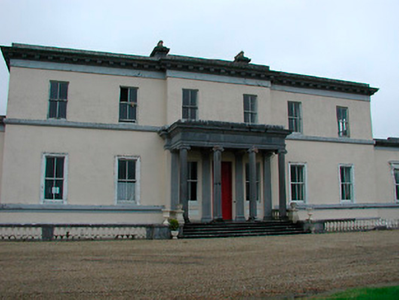
| Middleton Park | Middleton House is marked on the first edition OS map (1838), with extensive gardens to the south east. The present house is a six-bay two-storey over basement country house, built c.1850, in an Italianate style to designs by George Papworth (1781-1855) for George Augustus Boyd. He was resident at the time of Griffith’s Valuation (publ. 1854) when the building was valued at £100. It replaced an earlier smaller-scale house on the site, the property of James M Berry, who was resident in 1814 while W Hudson was the occupant in 1837 holding it from Berry. The present house remained in the Boyd-Rochfort family until 1958 and has had a number of owners since then, one of whom Barney Curly sold it through conducting a raffle. It has since been a hotel and was on the market again in 2023. |
|
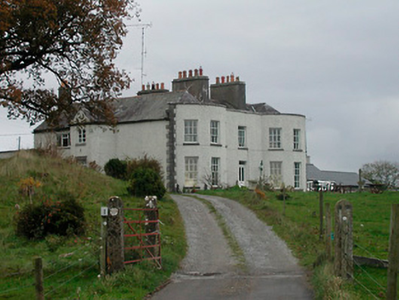
| Cornaher | Cornaher House, named on the first edition OS map, is a two-storey seven-bay country house, built in the early 19th century by the Rev John Vignoles, of Hugenot decent. He married a member of the Lowe family who previously owned the property. It was the home of the Rev. Charles Vignoles in 1814 and 1837, who was rector of the nearby Newtown Church of Ireland church. His sons Thomas and Samuel were in residence at the time of Griffith’s Valuation (publ. 1854) when the house was valued at £32. The Rev Charles Vignoles died at Cornaher in 1877. It was occupied by William George Lowe and family in 1901 and by the Davis family in 1911. Since then it has had a number of owners, been in use as an organic farm and Bed and Breakfast and was for sale in 2022. |
|
| New Forest | New Forest is a five-bay three-storey over basement country house, built in the 1770s by the Evans family and acquired by Henry Daniel before the end of the century. In 1837 New Forest was the home of a H. Daniel described by Lewis as ‘one of the most complete and gentlemanly residences in the county of Westmeath’. In 1843 Henry was succeeded by his son Robert Daniel who Griffith’s Valuation (publ. 1854) records was the occupant holding the house valued at £55 from Francis Evans. When the Evans estates in counties Mayo, Monaghan and Westmeath were for sale in the Landed Estates Court in November 1871, Newforest was described as forming 'one of the most complete and gentlemanly residences in the county of Westmeath'. (LEC rental 14 November 1871). O’Brien writes that the Daniels bequeathed the estate to the Catholic Church in the 20th century. It was sold in 1948 to Lt-General Sir Charles Gairdner, who was later appointed Governor of Western Australia (1951–1963) and then Governor of Tasmania (1963-68). Its extensive mature landscaped grounds are now in use as a golf course and the house is a hotel see https://newforest.ie/ | |
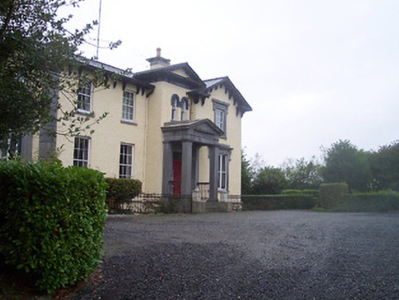
| Ballynagore House | This house was not built at the time of the first edition OS map (1838). It is a four-bay two-storey over basement house built in an Italianate style about 1852 for John Perry to designs by John Skipton Mulvany (1813-1870). The Perry Family were a prominent milling family in Ballynagore, having bought out the milling interests of the Mulock family in 1838, and owned the large mill to the southwest of the village and other extensive buildings in the locality at the time of Griffith’s Valuation (publ. 1854). The Perrys held their milling interests from the Very Rev Charles Vignoles. At this time the house was valued at £35 and was the residence of John Marshall. Now functions as a Bed and Breakfast. |
|
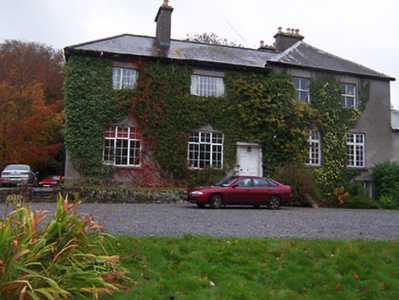
| Calverstown | Named on the first edition OS map, Calverstown House is a three-bay two-storey over basement house, built about 1800. Originally a Rochfort home it was occupied by Charles Rochfort in 1814. Calverstown House was the home of J. Hornidge in 1837. At the time of Griffith’s Valuation (publ. 1854) it was valued at £10, occupied by George Hornidge and held from Pilkington. Hornidge family members continued to live here until the mid-20th century. |
|
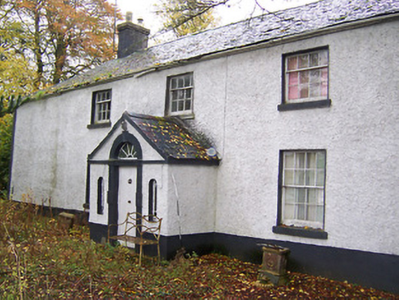
| Dalystown | Dalystown, marked on the first edition OS map and named on the 25 inch map, a three-bay two-storey house, built about 1810. It was the home of Charles Pilkington in 1837 and at the time of Griffith’s Valuation (publ. 1854). Valued at £11 the house was held from James W Berry with 189 acres. |
|
| Dalystown House | Dalystown House, marked on the first edition OS map and named on the 25 inch map. According to the Griffith’s Valuation map this was the house valued at £9 occupied by Samuel Cantrell who held it and 218 acres from James M Berry. This house was demolished. | |
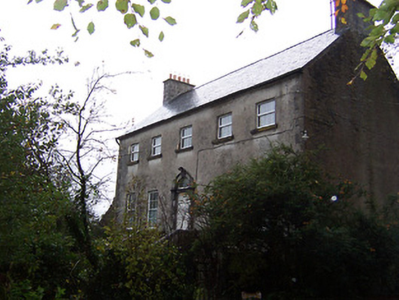
| Guilford House | This land was originally the property of the North family who were connected to the Earls of Guilford. A five-bay two-storey house over a raised basement, built in the late 18th century, possibly by the Reynolds family, but was leased to the Usher family by the end of the century. Occupied by Christopher Coffie/Coffey junior in 1814 and by F. Usher in 1837. At the time of Griffith’s Valuation (publ. 1854) Christopher Swift held the house valued at £12 from Francis Usher. O’Brien writes that the Reynolds family still own Guilford House. |
|
| Templeoran House | Templeoran House, named on the first edition OS map, this was a two-storey, five-bay late 18th century house which O’Brien states has been an ivy covered ruin for many years. In 1837 Mrs Johnson was resident and at the time of Griffith’s Valuation (publ. 1854) the house was the home of Edward Fetherstonhaugh, valued at £8.10 and held from George A Boyd. |