

Irishtown
Houses within 5km of this house
Displaying 9 houses.
Houses within 5km of Irishtown
Displaying 9 houses.
| House name | Description | |
|---|---|---|
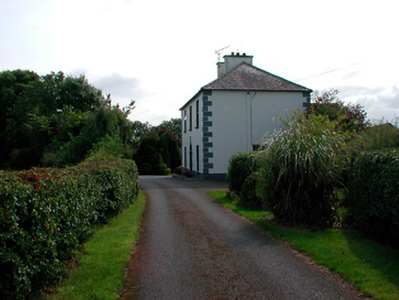
| Ballysallagh House | Ballysallagh house is not marked on first edition OS map. It is a three-bay two-storey late-Georgian-style farm house, built about 1850. At the time of Griffith’s Valuation (publ. 1854) it was occupied by Christina McCormick, who held the house valued at £11 from William Longworth. It is still in use as a residence. |
|
| Oran Vale | Located directly north of Ballynacarrigy, Oran Vale is named on the first edition OS map and was occupied by J Irwin in 1837. Valued at £15 it was unoccupied at the time of Griffith’s Valuation (publ. 1854) while the immediate lessor was Thomas William West who held the property from Alicia O’Connor Malone. The house is not named on the 25 inch map and is now a ruin. | |
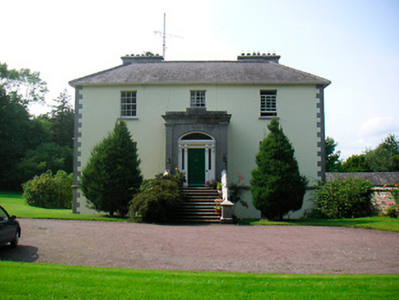
| Willybrook/Willifield | This house is named Willybrook on the first edition OS map and as Willifield on the 25 inch map. Valued at £12 at the time of Griffith’s Valuation (publ. 1854), it was occupied by Joseph Evers who held it from Alicia O’Connor Malone (in Chancery) and remains a well maintained residence. |
|
| Kill House | Kill house marked on first edition OS map and the 25 inch map is located a short distance west of Sonna. At the time of Griffith’s Valuation (publ. 1854) it was valued at £17, occupied by Maria McCormick and held from George Thompson. It appears to be still extant with courtyard outbuildings. | |
| Rath House | Rath House, was the home of J West in 1837 and of Thomas West at the time of Griffith’s Valuation (publ. 1854), when the buildings, including a corn mill, were valued at £34 and held from Alicia O’Connor Malone. In 1906 the mansion house of Rath valued at £30 was in the occupation of Colonel John R Malone and was held with 62 acres of untenanted land. The census records would suggest that the local rector Rev Venn was actually resident. The house is now demolished. | |
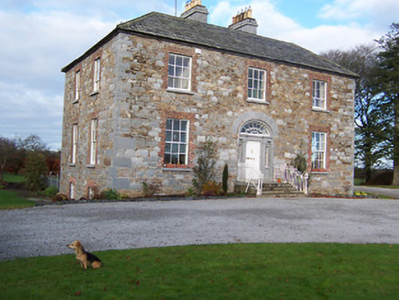
| Rathcastle | An early 19th century three-bay two-storey over a basement house, named on the first edition OS map. Rathcaslin was the residence of Thomas Banon, in 1837. By the time of Griffith’s Valuation (publ. 1854) George Murdoch occupied the house valued at £23 from John Devenish Meares. Home of William Brabazon in 1901. It was still in the possession of the Meares in 1906 and is still extant. |
|
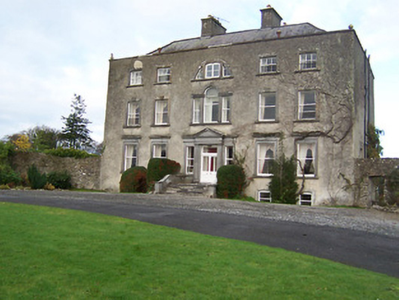
| Mearescourt | Named on the first edition OS map, this five-bay three-storey over basement Palladian country house was built about 1760, possibly incorporating the remains of earlier buildings, including a Medieval tower house. John Meares died in 1790 leaving his estate to his nephew, William Devenish. In 1814 William Devenish Meares was resident and in 1837 it was the seat of J Devenish Meares, as it was at the time of Griffith’s Valuation (publ. 1854) when the house was valued at £35. It remained a Meares home until the 1930s. In use as a guesthouse in the early 21st century. |
|
| Oldtown | Oldtown is named on the first edition OS map and the 25 inch map. A two-storey, three-bay house built by the Banon family. Occupied by J Banon in 1837 and at the time of Griffith’s Valuation (publ. 1854) by Thomas Bannon who held the property valued at £13 from James Fallon. Oldtown was for sale in the Encumbered Estates Court in 1851. The house, described as a comfortable two-story house, fit for the residence of a gentleman, was occupied by Anne, Frances and Maria Banon, (Sale Rental 19 Dec 1851) and was bought by James Fallon, a wine and spirit merchant of Dublin. James Fallon of Oldtown is recorded among the 1876 landowners of the county. The Fallon family were still resident at the beginning of the 20th century. | |
| Ballincurra House (Rathconrath) | Benjamin Digby held this property in fee at the time of Griffiths Valuation in the early 1850s when it was valued at £23. The original Valuation Office books had valued the property at £25 in 1850, It had a similar valuation in 1906 when it was owned by William Benjamin Digby. It survived into the 20th century but is now a ruin. |