

Lilliput
Houses within 5km of this house
Displaying 9 houses.
Houses within 5km of Lilliput
Displaying 9 houses.
| House name | Description | |
|---|---|---|
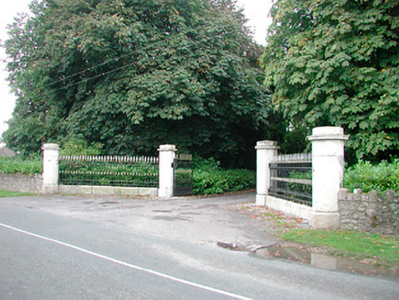
| Barrettstown | Barrettstown House was not built at the time of the first edition OS map (c. 1837). It is located just south of the railway line. At the time of Griffith’s Valuation (publ. 1854) it was valued at £22 and occupied by Thomas Murray who held the property from John Savage Nugent. Still occupied by the Murray family in 1911, this house is extant. |
|
| Dysart House | Dysart House was in ruins at the time the first edition OS map was compiled in the 1830s The Nugent family were resident here in the 18th century. Nugent of Desert is recorded on the Taylor and Skinner maps of the late 1770s. Lavallin Nugent born in 1722 died unmarried and the property was inherited by his brother John. When he died in 1812 it passed to his nephew Andrew Savage of Portaferry, Co Down who took the additional name of Nugent. Andrew Savage Nugent never lived at Dysart and it became a ruin. | |
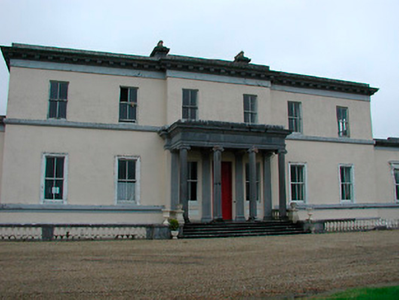
| Middleton Park | Middleton House is marked on the first edition OS map (1838), with extensive gardens to the south east. The present house is a six-bay two-storey over basement country house, built c.1850, in an Italianate style to designs by George Papworth (1781-1855) for George Augustus Boyd. He was resident at the time of Griffith’s Valuation (publ. 1854) when the building was valued at £100. It replaced an earlier smaller-scale house on the site, the property of James M Berry, who was resident in 1814 while W Hudson was the occupant in 1837 holding it from Berry. The present house remained in the Boyd-Rochfort family until 1958 and has had a number of owners since then, one of whom Barney Curly sold it through conducting a raffle. It has since been a hotel and was on the market again in 2023. |
|
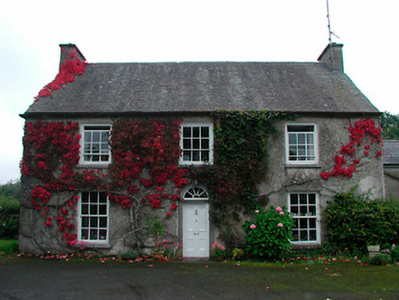
| Knock House | Knock house is marked on the first edition OS map and named on 25 inch. It is a three-bay two-storey house with a return, built about 1815 and still extant. At the time of Griffith’s Valuation (publ. 1854) the house was occupied by John Robinson who held it from Sir William Leeson. It was valued at £10. |
|
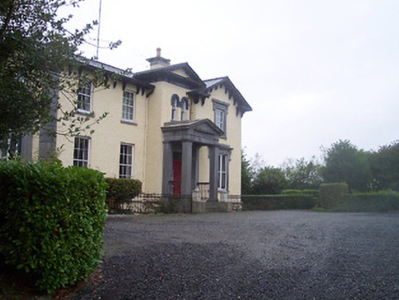
| Ballynagore House | This house was not built at the time of the first edition OS map (1838). It is a four-bay two-storey over basement house built in an Italianate style about 1852 for John Perry to designs by John Skipton Mulvany (1813-1870). The Perry Family were a prominent milling family in Ballynagore, having bought out the milling interests of the Mulock family in 1838, and owned the large mill to the southwest of the village and other extensive buildings in the locality at the time of Griffith’s Valuation (publ. 1854). The Perrys held their milling interests from the Very Rev Charles Vignoles. At this time the house was valued at £35 and was the residence of John Marshall. Now functions as a Bed and Breakfast. |
|
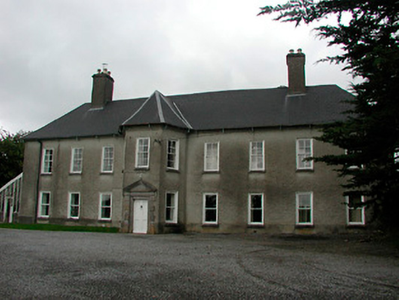
| Carrick | Carrick House located near the eastern shore of Lough Ennell, named on the first edition OS map, this is an eight-bay two-storey house, built c.1740. It is recorded on the Taylor and Skinner maps of the late 1770s and was the home of the Fetherstonhaugh family. It was the residence of William Fetherstonhaugh (died 1851) in 1837 and held by his son, another William, in fee at the time of Griffith’s Valuation (publ. 1854) when the house was valued at £29. He married Alicia daughter of Thomas Berry and they had a son Francis Berry Fetherstonhaugh who married Elizabeth Hornidge of Calverstown. Their descendants were still living at Carrick in the 1920s. |
|
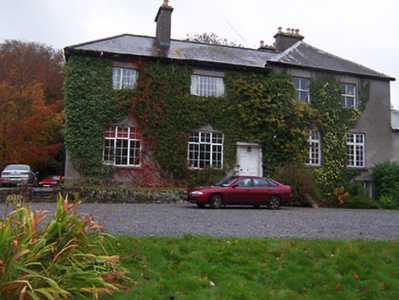
| Calverstown | Named on the first edition OS map, Calverstown House is a three-bay two-storey over basement house, built about 1800. Originally a Rochfort home it was occupied by Charles Rochfort in 1814. Calverstown House was the home of J. Hornidge in 1837. At the time of Griffith’s Valuation (publ. 1854) it was valued at £10, occupied by George Hornidge and held from Pilkington. Hornidge family members continued to live here until the mid-20th century. |
|
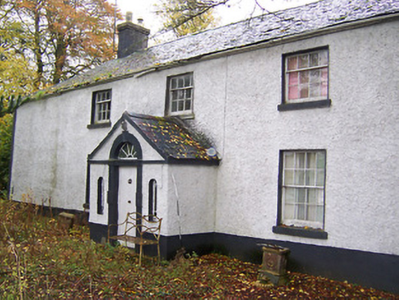
| Dalystown | Dalystown, marked on the first edition OS map and named on the 25 inch map, a three-bay two-storey house, built about 1810. It was the home of Charles Pilkington in 1837 and at the time of Griffith’s Valuation (publ. 1854). Valued at £11 the house was held from James W Berry with 189 acres. |
|
| Dalystown House | Dalystown House, marked on the first edition OS map and named on the 25 inch map. According to the Griffith’s Valuation map this was the house valued at £9 occupied by Samuel Cantrell who held it and 218 acres from James M Berry. This house was demolished. |