

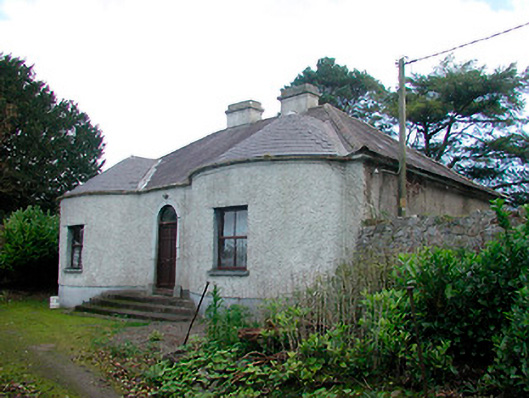
Belville
Houses within 5km of this house
Displaying 17 houses.
Houses within 5km of Belville
Displaying 17 houses.
| House name | Description | |
|---|---|---|
| Annagh | Annagh was a Dillon home as probably were Glenmore and Lakeview houses also in this townland. There is a building still at the Glenmore site but the other two houses are gone. O’Brien writes that an early 19th century house was built in front of an earlier house and that Dillons lived here from at least the mid-18th century. In 1814 and 1837 Christopher R Dillon was resident and Mary Ann Dillon in the mid-19th century when the house was valued at £10 and held from Lord Ashtown of Woodlawn, County Galway. In the latter part of the 20th century the house was abandoned and is now derelict. | |
| Rossana House | Rossana House is named on the first edition OS map. It was built in the early 19th century but is not mentioned in Leet (1814). However, Lewis records Captain Stubbs as the occupant in 1837. By the time of Griffith’s Valuation Elizabeth Murray (nee Rushworth), widow of Major General James P Murray of Killinure House, was resident holding the property valued at £16.5 from Anne Stubbs who held the 30 acre townland from the King-Harmans. Members of the Murray family appear to have occupied the house during the rest of the 19th century. John and Ethel Hall were resident in 1901. Sold to the Sisters and Disciples of the Divine Master in the mid-1960s and demolished circa 1990 according to the list of Protected Structure for the county. | |
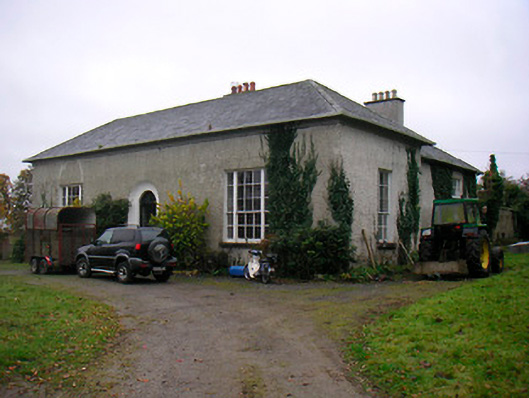
| Easthill House | Detached three-bay early nineteenth-century Regency villa, built in 1803. This house was originally built by a branch of the Handcock-Temple family of nearby Waterstown House and by 1814 was the home of Richard Cuppaidge, who is also recorded in 1837 as the occupant. John Cuppaidge was resident at the time of Griffith’s Valuation. The house was the property of the Clynes, Dolan and O’Shea families in the 20th century. |
|
| Waterstown House | This Palladian style country house on rectangular plan, constructed c.1745 was designed by the German architect Richard Castle (1695-1751) for Gustavus Handcock and his wife Elizabeth Temple. It has important historical connections with the Temple-Handcock family, who were originally granted the lands around Waterstown as payment for services to the Crown during the Cromwellian Wars (boi). Robert Handcock Temple was resident in 1814 and 1837. Valued at £47 in the mid-19th century it was occupied by Robert Holmes. The buildings had increased in value to £61.15 in 1906. It remained within the Temple-Handcock family until mid-1923 when they sold the estate to the Land Commission. In 1928 the pedimented doorcase at Waterstown was removed and re-erected at Lissglassick House (Longford) and the house became a ruin in the 1930s. |
|
| Ballaghkeeran House | Ballaghkeeran House marked on the 25 inch OS map but not on the earlier first edition map. This ‘mansion’ house was erected in the 1860s according to a Murtagh sale rental of 8 December 1876 which states that the sale included “a fine residence, erected within the last ten years, regardless of expense, built on an eminence affording commanding views of lake scenery … and approached from the public road by a handsome carriage drive, with ornamental iron gates and lodge at entrance’. Mrs Murtagh was the occupant at this time holding the house and nine acres as a tenant under the Court of Chancery. Members of the Murtagh family were still living in the house in 1901 and 1911. This house appears to be the residence of a farming enterprise. | |
| Bellanalack | Bellanalack is marked on the first edition OS map and the later 25 inch map but a much smaller building is now located on the site. The house was occupied by Christopher Adamson in 1837 and at the time of Griffith’s Valuation (publ. 1854). He held the property valued at £13 from Lord Castlemaine. | |
| Carn Park | Carn Park was built by the Adamson family in the late 18th century. Travers Adamson, son of William Gustavus Adamson was resident in 1814 and W G Adamson in 1837. At the time of Griffith’s Valuation (publ. 1854) the property was in Chancery, Robert Adamson was the occupant and the buildings were valued at £24. On 17 June 1870 when the house and lands were advertised for sale in the Land Court the house was described as a ‘commodious dwelling house (with suitable out offices) on Lot 1, which, although somewhat out of repair, is capable (at a moderate outlay) of being made a comfortable residence for a gentleman and his family. The house is prettily situated on the slope of a hill, commanding an extensive view’. It was bought by the Rev Thomas Thompson Gray of Dorrington, Drumraney, who was Vice Provost of Trinity College, Dublin, 1916-1924. The house was demolished in the mid-20th century. | |
| Coolvuck House | O’Brien writes that this early 19th century house was probably built by Francis Dillon, who was recorded as the occupant in 1814. Valued at £13 at the time of Griffith’s Valuation (publ. 1854), it was occupied by Eneas McDonnell who held the property from James George Murphy. Occupied by Thomas Groarke, a farmer and his sister in 1901 and by Thomas Killoughy, a shepherd who held it from Thomas Groarke in 1911. | |
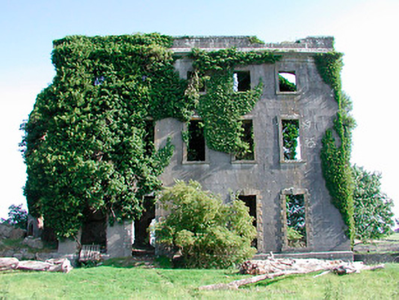
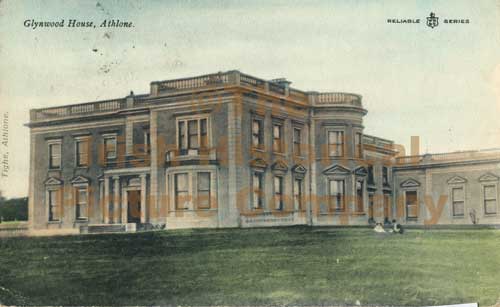
| Glynwood House | Glynwood house is located east of Athlone. The original house was constructed about 1790 by Francis Longworth and rebuilt about 1860 by John Longworth (1798-1881). A new house in the Italianate style was built in the early 1880s for Francis Travers Dames Longworth to the design of George Moyers. On 1 February 1918, a few lines in the Belfast News-Letter stated that Glynwood House, Athlone, the family mansion of the Dames-Longworth family, had been destroyed by fire. It is now an ivy covered ruin. See https://houseandheritage.org/2018/02/01/glynwood-house/ The present Glynwood House, formerly the agent’s house is located to the northwest of the site of the original Glynnwood House and dates from the late 19th century. |
|
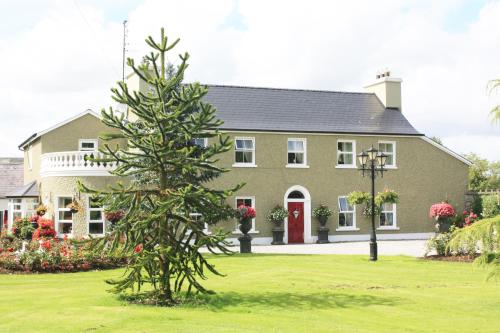
| Mount Temple House | Mount Temple House is marked on the first edition OS map, south of Holy Trinity Church and named on the 25 inch map. Leet records Richard Telford as resident at Mount Temple. At the time of Griffith’s Valuation (publ. 1854) Sarah Russell held the house and 182 acres from the Hon R T H Temple, the buildings were valued at £12. This house now provides accommodation for guests. See lodging-world.com/ei/hotels/mount-temple-house-in-moate-91944640. |
|
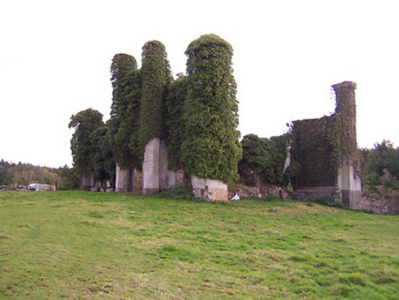
| Moydrum Castle | The National Built Heritage Service states that Moydrum Castle is a Gothic Revival castellated country house built circa 1812 to designs by Sir Richard Morrison (1767-1849), who was commissioned by William Handcock to rebuild an existing house befitting of his new status as Lord Castlemaine. Lewis describes it as ‘a handsome castellated mansion, erected in 1814’. It was valued at £75 in the mid-19th century. The building remained the home of the Castlemaines until it was burnt down on 3 July 1921. A photograph of the remains featured on the cover of the U2 album ‘The Unforgettable Fire'. |
|
| Nahodmore House | This building is marked on the first edition OS map, altered and expanded on the 25 inch map. O’Brien states that it was built by the Adamson family. Leet records William Marsh as resident at Nahad in 1814. Valued at £11 Nahodmore House was occupied by Thomas Russell and held from John Trench at the time of Griffith’s Valuation (publ. 1854). William Woods Russell son of Mark Goodbody Russell and his wife Mary was born at Nahodmore in July 1855 (The British Friend, 9th month 1855, p 227). Mark Goodbody Russell and his daughter Mary were both living there in 1901. They were members of the Society of Friends while caretakers Alexander and Jane Elder for William W Russell were living there in 1911. This house, a short distance north west of Moate, is still extant. | |
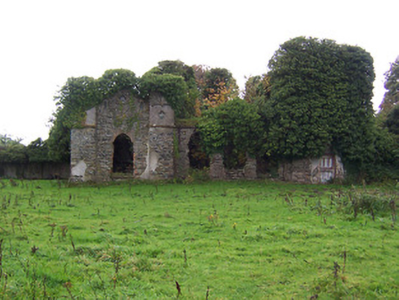
| Shurock | The Homan family appear to have settled at Shurock in the early 18th century. The original house at Shurock was built sometime in the eighteenth century, with a later single-storey Gothic wing added at the end of the eighteenth century. This house was the home of Captain Homan, about 1760 and of Sir W Jackson-Homan (barrister) in 1837. Sir William was created a baronet in 1801. The house is marked but not named on the first edition OS map and the building later expanded as shown on the 25 inch map. O’Brien states that the house was sold in the Encumbered Estates Court and it must have been purchased by George Fleming as he was the occupant at the time of Griffith’s Valuation (publ. 1854) holding it in fee. It was valued at £23. The house is now a ruin. |
|
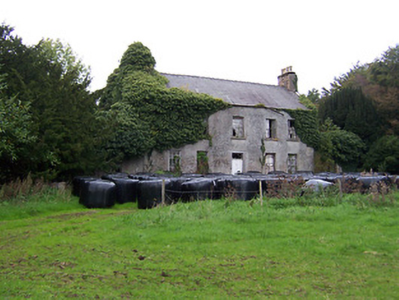
| Twyford | Twyford House was originally built about 1760 by the Handcock Family of Waterstown House, Glassan, but passed into the ownership of the Hodson Family, at the end of the 18th century. In 1814 John Hodson was resident and E Hodson in 1837. Valued at £24 John Hodson was the occupant at the time of Griffith’s Valuation (publ. 1854), holding the property from John Longsworth. The Hodsons continued to reside at Twyford until it was sold about 1960. The house is now derelict. |
|
| Ardnagragh | Alicia Nugent was leasing this property, which included a mill, from the Digby estate at the time of Griffiths Valuation in the early 1850s, when it was valued at £23. The National Inventory of Architectural Heritage indicates that the house is still in use though the mill has been demolished. | |
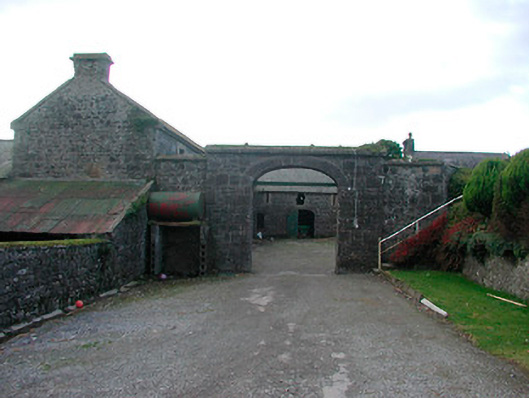
| Dorrington House | At the time of Griffiths Valuation St. George Gray held this property in fee when it was valued at £32. It is labelled Dorrington House on all editions of the Ordnance Survey maps. In 1906 it was the property of Wellington Gray and valued at £44. O'Brien writes that the house was demolished during the twentieth century and a newer house constructed at the site but extensive estate architecture survives. |
|
| Walderstown Lodge | William Potts was leasing this property from the Gray estate at the time of Griffiths Valuation in the early 1850s, when it was valued at £12. O'Brien writes that it was possibly built by the Dorrington Hackett family of nearby Dorrington House. It was acquired by the Gray family by inheritance and became a dower house. It is still extant. |
|