

Manor Mill House
Houses within 5km of this house
Displaying 7 houses.
Houses within 5km of Manor Mill House
Displaying 7 houses.
| House name | Description | |
|---|---|---|
| Ballinree House {Longford) | Phillip Kiernan was leasing Ballinree House from the Moore O’Farrell estate at the time of Griffiths Valuation, when it was valued at £5. A larger house is shown on the 25-inch Ordnance Survey map of the early 20th century. A house and large farm occupy the site now. This house was associated with the Farrell family in the 18th century as local sources recall "Bonny Pat Farrell" a United Irishman killed at the Battle of Granard in 1798. | |
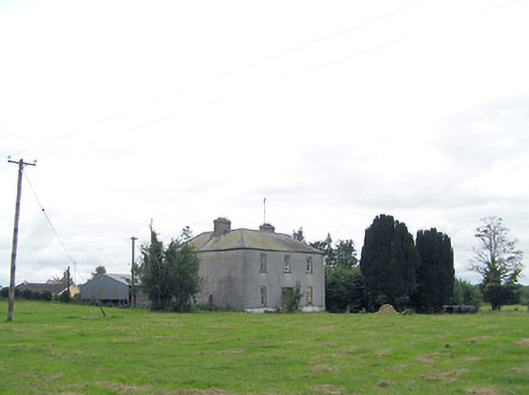
| Lissanure House | Lissanure House is labelled on the 25-inch Ordnance Survey map of the early 20th century. At the time of Griffiths Valuation in the early 1850s, the property at this site was occupied by William Green, leasing from the Tuite estate, when it was valued at £4. The National Built Heritage Service suggests that the current building replaced the earlier house in the 1850s. It is still extant but not used. |
|
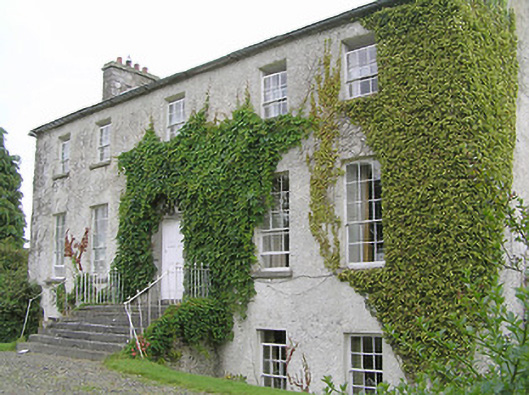
| Clonwhelan | Richard White held this property in fee at the time of Griffiths Valuation when it was valued at £15. In 1814 Leet referred to it as the residence of Miss Godley. James Bond was the occupier at the time of the initial valuation in 1839 when it was valued at £12. It is still extant |
|
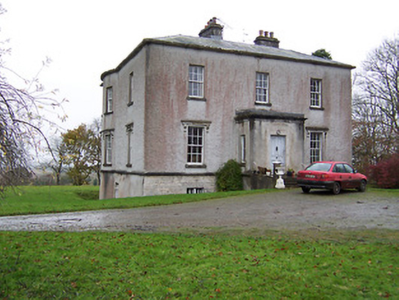
| Rockfield/Cromlyn | A house known as Rockfield (N295657) is named on the first edition OS map at the southern end of Glen Lough. The lands and house were leased to John Crawford by Sir Peter Nugent in 1795. Matthew Crawford was resident in 1814. A later house a short distance to the east was built by the Crawfords in the late 1840s according to the sale rental of 2 December 1862, ‘The house, which is a spacious and well-built mansion erected within the last fifteen years at an expense of upwards of £2,000 … The house contains on the basement-story nine rooms, including kitchen, wine-cellar, scullery etc with every accommodation for servants. There are on the first floor four large reception-rooms, one dressing room, two pantries, bath-room etc. On the second floor, seven commodious and well-proportioned sleeping apartments besides bathrooms etc.’ This house was originally known as Rockfield and was valued at £36 at the time of Griffith’s Valuation (publ. 1854) when occupied by Matthew Crawford. The name of the house may have been changed to ‘Cromlyn’ when it was purchased by Charles John Battersby of Ballinalack in 1862. It is named as Cromlyn on the 25 inch map (circa 1914). The house remained in the possession of the Battersby family well into the 20th century. |
|
| Crossea | John O’Byrne [O’Beirne] was leasing this property from the Ecclesiastical Commissioners at the time of Griffiths Valuation in the early 1850s when it was valued at over £10. The original Valuation Office books record a valuation of £12 in 1839. The Ordnance Survey Name Books suggest the townland was in the hands of Reverend Mr. Oliver in the mid-1830s. A large farm is still extant at the site. | |
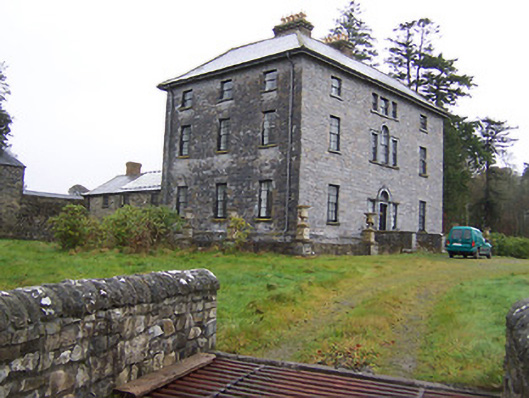
| Newpass | Griffiths Valuation notes the owners of Newpass as Elizabeth Westby and the representatives of Sir. G. Fetherson. Elizabeth Westby was the wife of William Westby and the daughter of George B. Whitney of Newpass. The house was unoccupied in the early 1850s and valued at £35. The National Inventory of Architectural Heritage suggests it was built c.1775 by the Whitney family, probably on the site of an earlier house. Taylor and Skinner noted it as a Whitney property in 1777. O'Brien states that Colonel Whitney first purchased the Newpass estate in 1670. In 1906 it was owned by Major E. Henry Fetherston Whitney and valued at £43. It is still extant. The estate also owned property in the nearby village of Rathowen. |
|
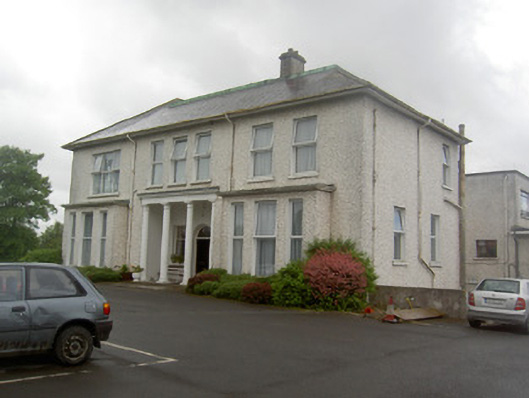
| Edgeworthstown House | The Edgeworth family had been settled at Edgeworthstown in the parish of Mostrim, County Longford, since the 17th century. At the time of Griffiths Valuation in the 1850s, Fanny Edgeworth was leasing the property from Charles Edgeworth, when it was valued at £45. [It is likely that Fanny was his stepmother} The National Built Heritage Service suggests the present building began in 1725 but had several rounds of modifications subsequently. In more recent years it has served as a health care facility. |
|