

St Marks
Houses within 5km of this house
Displaying 12 houses.
Houses within 5km of St Marks
Displaying 12 houses.
| House name | Description | |
|---|---|---|
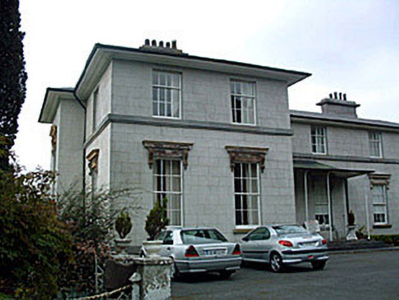
| Ladywell | Although much of the demesne of Harmony Hall is shown in the townland of Bunown on the first edition OS map, the house Ladywell was not built at this time. An elegant Italianate country house, six-bay two-storey over (partial) basement country house on L-shaped plan, built about 1845 to a design by Sandham Symes (1808-1894), for the Mahon Family (boi). In the mid-19th century Ross Mahon was the occupant holding the building valued at £37 in fee. Members of the Metge, Crofton, Williams and Flannery have all been occupants of this house. It has extensive views over Killinure Lough to the south. |
|
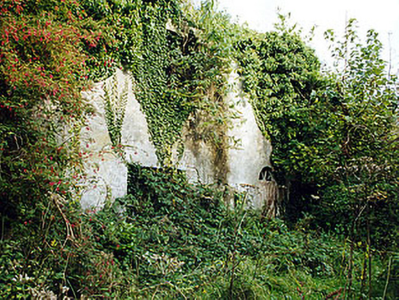
| The Lodge | The Lodge on Hare island was a hunting/fishing lodge built c 1814 for William Handcock, 1st Lord Castlemaine of Moydrum to designs by Sir Richard Morrison (1767 - 1849), having a veranda supported on cast-iron pillars to the entrance front (boi). In 1837 Lewis describes it as a ‘Beautiful cottage’ belonging to Lord Castlemaine. On Hare Island he engaged in fishing, shooting and boating on Lough Ree and hosted many social events on the island during the first half of the nineteenth century. In 1906 the buildings on Hare Island were valued at £18, occupied by Lord Castlemaine who held 110 acres of untenanted land there. It is now derelict. |
|
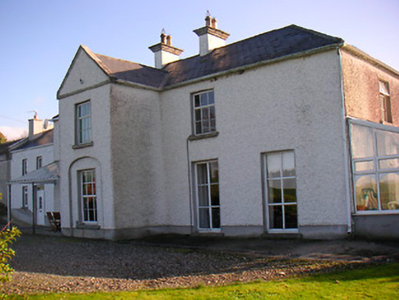
| Lough Ree Lodge | This lodge located on the eastern shore of Lough Ree, named on the first edition OS map, is a four-bay two-storey house, built c.1815, by a branch of the Handcock-Temple family of Waterstown House. It was the home of a Gustavus H. Temple, in 1837 and at the time of Griffith’s Valuation, when it was valued at £21. Later the home of the Daniels and Fagan families and still occupied. |
|
| Killinure House | Killinure House located close to the eastern shore of Lough Ree is an early 19th century house originally constructed by a branch of the Murray Family. Occupied by Alexander Murray in 1814 and by Major General Murray in 1837. It was later the home of the Maunsell Family in the mid-to-late nineteenth-century. Members of the Brereton and Metge families were residents in the 20th century. It was later the home of the Reid family who opened it as a hotel. The Glasson Lakehouse hotel resort is located there now. |

|
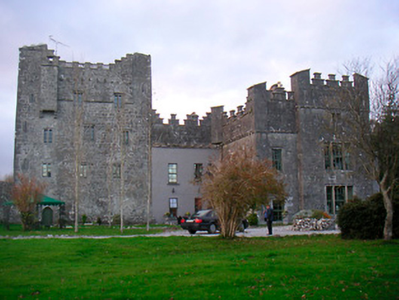
| Portlick Castle | Portlick Three-bay four-storey late medieval tower house, built c.1500 by the Dillon family, with later seven-bay two-storey extension added to the southwest, c.1800, and a two-bay two-storey castellated block added to the southwest corner of this extension, c.1865 (boi). In 1696 granted to Thomas Keightly, a member of King William's privy council in Ireland who sold it to William Palmer of Dublin. About 1703 bought by the Smyth Family, who remained in ownership of Portlick Castle into the twentieth century. Valued at £26 and held by Robert Smyth in fee at the time of Griffith’s Valuation. A fire in 1861 damaged much of the building. Sold by a descendant of the Smyth family in 1955, the castle has been restored in recent times and has been used as a wedding venue. The Westmeath Independent reported the castle’s purchase by a family from California in January 2021. |
|
| Rossana House | Rossana House is named on the first edition OS map. It was built in the early 19th century but is not mentioned in Leet (1814). However, Lewis records Captain Stubbs as the occupant in 1837. By the time of Griffith’s Valuation Elizabeth Murray (nee Rushworth), widow of Major General James P Murray of Killinure House, was resident holding the property valued at £16.5 from Anne Stubbs who held the 30 acre townland from the King-Harmans. Members of the Murray family appear to have occupied the house during the rest of the 19th century. John and Ethel Hall were resident in 1901. Sold to the Sisters and Disciples of the Divine Master in the mid-1960s and demolished circa 1990 according to the list of Protected Structure for the county. | |
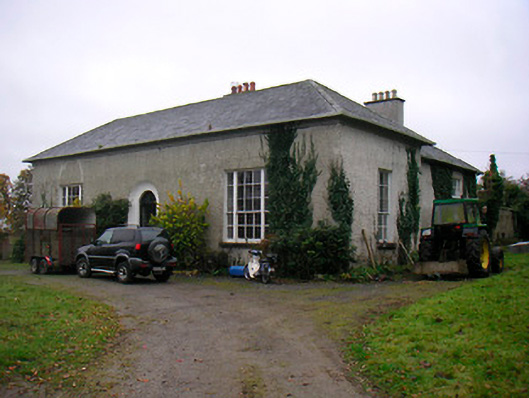
| Easthill House | Detached three-bay early nineteenth-century Regency villa, built in 1803. This house was originally built by a branch of the Handcock-Temple family of nearby Waterstown House and by 1814 was the home of Richard Cuppaidge, who is also recorded in 1837 as the occupant. John Cuppaidge was resident at the time of Griffith’s Valuation. The house was the property of the Clynes, Dolan and O’Shea families in the 20th century. |
|
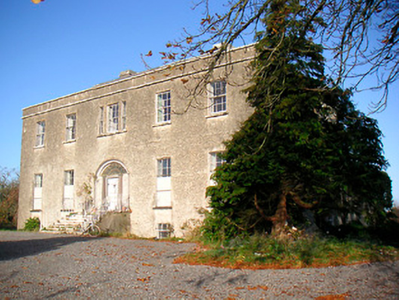
| Harmony Hall | O’Brien writes that Harmony hall was built in 1788 by Colonel William Caulfield, a member of a branch of the Caulfield family, Earls of Charlemont. In 1842, Colonel John Caulfield sold the house to Arthur Dunn Chaigneau and purchased Bloomfield House, Mullingar. Griffith’s Valuation records Chaigneau as the occupant and that the house was valued at £50. The National Inventory of Architectural Heritage states that the house was built by the Handcock Temple family. Occupied by Edward Molony Gleeson of the Athlone Woollen Mills in the 1880s. Occupied by the Fox, Wilson and Fitzsimons families in the 20th century. |
|
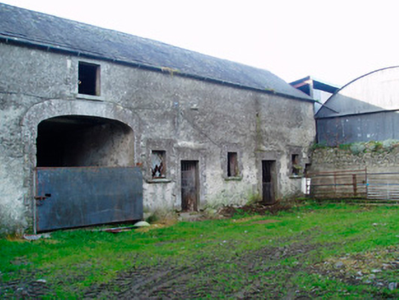
| Lackan Lodge | O’Brien writes of Walter Dillon living at Lackan in 1796. Lackan Lodge, valued at £14, was occupied by William Thomson in the mid-19th century. He held the property from the Dillons minors. A new building has been erected on this site. |
|
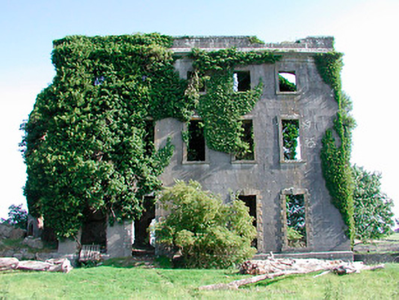
| Waterstown House | This Palladian style country house on rectangular plan, constructed c.1745 was designed by the German architect Richard Castle (1695-1751) for Gustavus Handcock and his wife Elizabeth Temple. It has important historical connections with the Temple-Handcock family, who were originally granted the lands around Waterstown as payment for services to the Crown during the Cromwellian Wars (boi). Robert Handcock Temple was resident in 1814 and 1837. Valued at £47 in the mid-19th century it was occupied by Robert Holmes. The buildings had increased in value to £61.15 in 1906. It remained within the Temple-Handcock family until mid-1923 when they sold the estate to the Land Commission. In 1928 the pedimented doorcase at Waterstown was removed and re-erected at Lissglassick House (Longford) and the house became a ruin in the 1930s. |
|
| Ballaghkeeran House | Ballaghkeeran House marked on the 25 inch OS map but not on the earlier first edition map. This ‘mansion’ house was erected in the 1860s according to a Murtagh sale rental of 8 December 1876 which states that the sale included “a fine residence, erected within the last ten years, regardless of expense, built on an eminence affording commanding views of lake scenery … and approached from the public road by a handsome carriage drive, with ornamental iron gates and lodge at entrance’. Mrs Murtagh was the occupant at this time holding the house and nine acres as a tenant under the Court of Chancery. Members of the Murtagh family were still living in the house in 1901 and 1911. This house appears to be the residence of a farming enterprise. | |
| Creaghduff House | A building is marked at the site of Creaghduff House on the first edition OS map but the present house appears to have been built after this date. Gearoid O’Brien refers to Charles Handcock building the house at the time of Griffith’s Valuation (https://www.westmeathindependent.ie/2023/02/03/street-wise-coosan/). Valued at £17 as recorded in Griffith’s Valuation the house was occupied by the Hon Charles Handcock and held from Lord Castlemaine. It is located at the south west corner of Coosan Lough. Donal O’Brien writes that from the end of the 19th century Creaghduff was the home of Robert Degennes Levinge, a grandson of Sir Richard Levinge 4th Bt, and his descendants, who still live there. |