

Curraghroe
Houses within 10km of this house
Displaying 23 houses.
Houses within 10km of Curraghroe
Displaying 23 houses.
| House name | Description | |
|---|---|---|
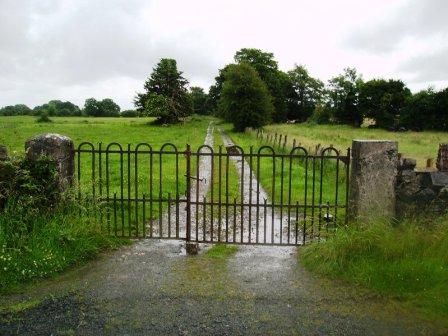
| Beechwood | A residence of the Hughes family in the 18th century. The sale rental of 1859 states that Beechwood was for many years the residence of the late Mr Ferrall. Daniel Ferrall of Beechwood was issued with a game licence in 1822. Occupied by Daniel Irwin in the 1850s when the house was valued at £40, by the Tolers in the 1880s and by Clare M. Nolan in 1906. Norton states that the Irwin brothers were nephews of Daniel Ferrall. Beechwood is no longer extant. |
|
| Gillstown | The residence of Mr John Stafford in 1749 and of J. Hogg in 1837. Occupied by Thomas Cox in the second half of the 19th century, who held the property from John Blakeney. Valued at £5 in the 1850s. In 1906 the buildings at Gillstown were valued at £8.10s and were occupied by the representatives of Thomas Cox. | |
| Drumdaff | Charles Croghan, a farmer, lived at Drumduff in 1749. Home of the Digby family in the 19th century. Held in fee by George Digby at the time of Griffith's Valuation when the buildings were valued at £17.It is still extant and maintained. |

|
| Fairymount | The home of Edward Mills in 1814. In 1828 Edward Mills of Fairymount was a member of the Grand Panel of county Roscommon. Residence of Mr Lyster at the time of the first Ordnance Survey. By the time of Griffith's Valuation the largest house in the townland of Fairymount was valued at £1.15s, leased by Anne Lyster to Michael Connolly. | |
| Mount Dillon | Lewis writes that the house was situated on an isolated hill and formed "a conspicuous object in the surrounding scenery". Valued at £15 in the mid 19th century. Wilson, in 1786, refers to it as the seat of Mr. Dillon. In the possession of Samuel Russell in 1906 when the buildings were valued at £3. It is no longer extant. | |
| Rooaun Lodge | At the time of Griffith's Valuation occupied by John Morton and held by him in fee, valued at £3. A house at Rooaun valued at £18 was occupied by T.A.F. O'Flaherty in 1906. | |
| Ballagh | In 1814 James O'Connor was residing at Ballagh. Described as a good dwelling house at the time of the first Ordnance Survey. Occupied by Denis O'Conor in the 1850s, held from Theobald Dillon and valued at £6. In 1906 James D. O'Connor occupied Ballagh, valued at £17. It is no longer extant. | |
| Mount Pleasant | The residence of John Devenish in the mid 19th century. In 1894 Slater noted it as the seat of Michael Murray. It does not appear to be extant. On the first Ordnance Survey map another house known as Riverdale is also located at M907 775 within the Mount Pleasant demesne. Buildings are still present at this site. | |
| Cloonfree | The residence of William Mahon. Apparently the residence of George Knox in the 1840s. http://www.ballykilcline.com/story_f.html | |
| Castlenode House | Residence of Thomas Morton esq in 1822 and of J. Morton in 1837. In the mid 1850s, George Walpole was the occupant of this house, which he held from the Pakenham Mahon estate when it was valued at £8. A house still occupies the site of the original Castlenode House. | |
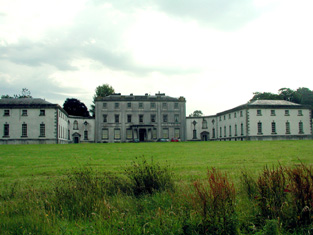
| Strokestown House | Late 17th century house altered in the early 19th century and home of the Mahon family for three centuries. In 1786 Wilson described it as "fine mansion house with ample and beautiful demesne". Referred to as "Bawn House", the mansion of Lord Hartland, by Lewis in 1837. Valued at £70 in the mid 19th century. Now a major tourist attraction containing the Famine Museum. http://www.strokestownpark.ie/ |
|
| Newtown Glebe | Newtown Lodge was occupied by Anthony Dignam in 1814 and the Glebe House at Newtown, valued at £18, was occupied by Reverend Joseph Morton at the time of Griffith's Valuation. It was leased from the Pakenham-Mahon estate. It is still extant. | |
| Cloonfinlough Lodge | Occupied by Robert Devenish at the time of Griffith's Valuation, who held the property from John Caulfeild. Buildings are still extant at the site. | |
| Toberpatrick | Originally a Wynne property, occupied by Mulloy McDermott in 1837. In the 1830s the townland is recorded as including the ruins of Clooncaface House. The residence of Alonzo Lawder in the mid 19th century, held in fee and valued at £20. Occupied by B. F. McDonnell in 1906. A later house is extant at the site now. | |
| Lisroyne Lodge | A house on the outskirts of Strokestown, part of the Strokestown House demesne, valued at £10 at the time of Griffith's Valuation and occupied by Michael Flynn. Some buildings are still extant at the site. | |
| Cloonagh Lodge | An extensive complex of mills is shown at this location on the 1st edition Ordnance Survey map of 1840, including two flour mills. At the time of Griffith's Valuation, Matthias McDonnell was leasing mill properties, valued at £67, from the estate of the Marquis of Sligo. In addition he was leasing a house valued at £4. Cloonagh Lodge is shown on the 25-inch Ordnance Survey map of the 1890s. A house is still extant at the site. . | |
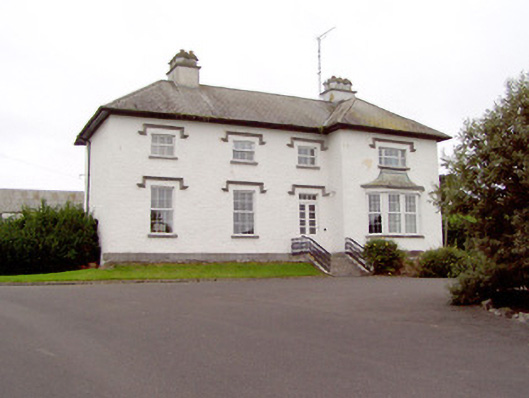
| Rathcline House | St. George Johnston was leasing this property from Colonel Henry White’s estate at the time of Griffiths Valuation in the early 1850s when it was valued at almost £38. Earlier, in 1837, Lewis referred to it as the seat of L. White. The National Built Heritage Service suggests the current house was built c.1820 though there is evidence to suggest there was an earlier house, also owned by the White family, at the site in the 1770s. Rathcline House served as a convent for the Sisters of Mercy in the mid-20th. It is still extant. |
|
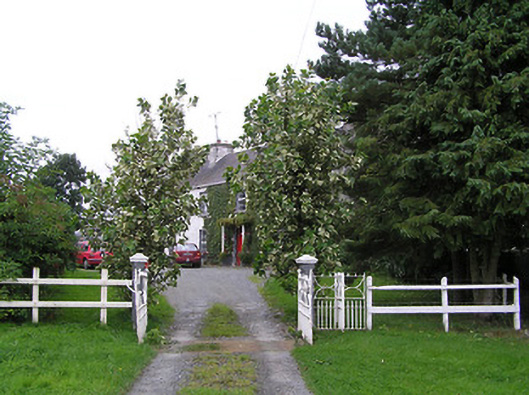
| Middleton House | Michael Quinn held Middlton in fee at the time of Griffiths Valuation in the early 1850s, when it was valued at almost £13. In 1837 Lewis referred to Middleton as the seat of H. Montfort while in 1814 Leet notes it as the residence of W.B. Montfort. It is still extant. |
|
| Richmond Mill | At the time of Griffiths Valuation in the early 1850s, William Fleming was leasing this substantial site from the Gunning estate when the buildings were valued at £95. The Valuation Office Books note a valuation of £72 in 1840. The property is labelled as a distillery on the 1st edition Ordnance Survey map but as corn mill on the 25-inch map. The ruins of the miller’s house and mill buildings are still visible at the site. |

|
| Fair View (Longford) | Jeremiah Gibson was leasing this property from the Gunning estate at the time of Griffiths Valuation in the mid-1850s, when it was valued at over £18. A later house possibly exists at the site now. | |
| Rhynmount (Rinnmount) | Reverend G. Moore was leasing this property from George J. Mitchell at the time of Griffiths Valuation, when it was valued at £10. It is labelled Rinn Mount on the 1st edition Ordnance Survey map but as Rhynmount on the later 25-inch edition. A modern house exists at this site now. | |
| Springfield (Clogher) | At the time of Griffiths Valuation in the early 1850s, Valentine S. Ripton was leasing this property from Reverend George Moore when it was valued at £10. The Valuation Office Books of 1840 also record him as the occupant. The house is labelled Clogher on the 1st edition Ordnance Survey map of 1838 but as Springfield on the 25-inch edition of the early 20th century. A house is still extant at the site. |
|
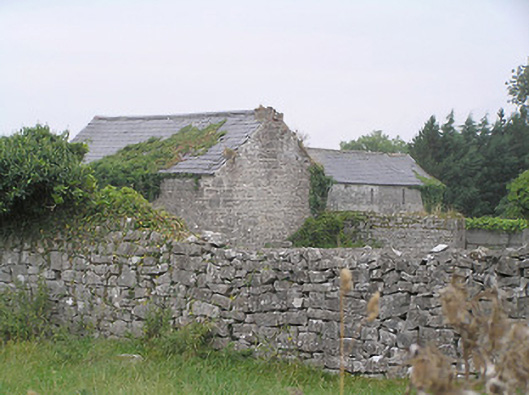
| Barnacor Mill | John Costello was leasing this property from Luke White’s estate at the time of Griffiths Valuation, when it was valued at £28. Some buildings still remain at the site. |